
Opening of the Free Energy Market: 2026 Guide
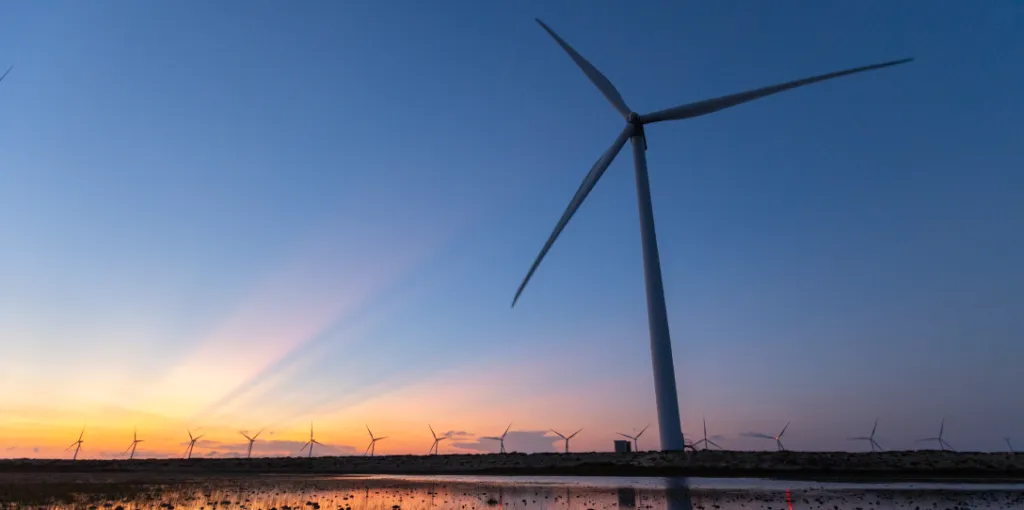
Since January 2024, all Group A consumers (high and medium voltage) have been able to join the Free Energy Market, meaning they can negotiate and choose who they contract their electricity from.
Keep reading to understand more details about the new determinations of the Free Energy Market, especially those coming up in 2026.
What is the Free Energy Market?
The Free Energy Market is a contracting environment where it is possible to choose your energy supplier. In August 1998, the National Electric Energy Agency (ANEEL) published Resolution 265, allowing the free trading of electricity in the country for certain groups.
In the Free Energy Market, participants can negotiate directly with trading companies—which can also be generators and developers—regarding price, contracted energy volume, supply period, payment methods, and other conditions. This makes it possible to find better energy prices and more advantageous conditions, including from clean energy suppliers.
It is important to understand that in commercial terms, there are two energy contracting environments, which are:
Regulated Contracting Environment (ACR): captive consumers and tariffs set by ANEEL;
Free Contracting Environment (ACL): free consumers negotiate their contracts, prices, and terms directly.
How does the Free Contracting Environment work?
In the Free Environment, generators, trading companies, importers, exporters, and free consumers negotiate directly, becoming less dependent on distributors regarding energy supply. Free consumers pay at least two bills monthly:
One to the distributor, referring to the energy delivery service (use of the grid);
Another to the chosen energy vendors. The number of bills corresponds to the number of contracts. Values and conditions are predefined, with no tariff flag surcharges.
This structure allows for much greater transparency and customization of energy costs.
Until 2023, the Free Market had around 35,000 companies. In 2025, according to data from CCEE (Electric Energy Commercialization Chamber), more than 50,000 companies are already operating in the Free Energy Market, highlighting the sector's expressive growth over the last two years.
How did the Free Energy Market work before the change?
Before 2024, only companies with a contracted demand equal to or greater than 500 kW could migrate to the Free Energy Market. In the case of combined business units, they needed to reach 500 kW, share the same CNPJ root, belong to the same submarket, and have at least 30 kW of demand each.
The energy market (whether free or captive) divides its consumers into different groups, which are:
Group A (medium and high voltage)
These are consumer units with a voltage greater than or equal to 2.3 kV, or served by an underground distribution system at a voltage of less than 2.3 kV. This group is subdivided into:
A1 (high voltage): voltage greater than or equal to 230 kV;
A2 (high voltage): voltage greater than or equal to 88 kV and less than or equal to 138 kV;
A3 (high voltage): voltage equal to 69 kV;
A3a (medium voltage): voltage greater than or equal to 30 kV and less than or equal to 44 kV;
A4 (medium voltage): voltage greater than or equal to 2.3 kV and less than or equal to 25 kV;
AS: voltage less than 2.3 kV, from an underground distribution system.
Group B (low voltage)
Consumer units with a voltage of less than 2.3 kV. This group is subdivided into:
B1: residential class and low-income residential subclass;
B2: rural class
B3: other classes such as industrial, commercial, services, and activities like public power, public service, and self-consumption;
B4: public lighting class
What changed in the Free Energy Market in 2024 for small and medium-sized enterprises?
With the change defined through MME Normative Ordinance No. 50 of September 27, 2022, Group A consumers (medium and high voltage) will be able to choose who they buy their electricity from.
This means that businesses such as bakeries, shopping malls, and restaurants connected to medium and high voltage can choose their contracted energy generator and thus negotiate prices, have greater expenditure predictability, and be free from tariff flags.
Entering the Free Energy Market also allows for the choice of clean energy generators, such as Serena. This way, businesses save on their electricity bills and embrace renewable energy consumption.
When will Group B be able to be part of the Free Energy Market?
After several public consultations and regulatory negotiations in 2025, the possibility of migration for Group B consumers starting in August 2026 is confirmed.
The official schedule defines that:
The opening will be phased, initially for industries and commerce (B3 and B4 classes);
Subsequently, the residential segment will also be able to migrate;
This expansion will bring new contract options, customization, and strong competition between generators and trading companies, generating even more expressive advantages for SMEs and small businesses;
The measure is planned to ensure tariff balance and stability for the sector, with impact monitoring throughout the process.
Expectations and trends for those planning to migrate in 2026
The opening of the market in 2026 brings more opportunities and cost reduction for SMEs; check out the main ones:
Potential savings: Group B companies can save between 20% and 30% on their electricity bills, depending on their consumption profile and negotiation skills;
Competition and offers: in 2026, suppliers are expected to present new modalities and customized packages to attract small and medium-sized businesses;
Clean energy: the supply of renewable energy contracts and digital management services is increasing, with more than 240 new wind and solar plants scheduled by 2026;
Simplified procedure: the migration process will be streamlined, with technical support from energy trading companies and specialized consultancies.
Investments: the sector is projected to receive investments above R$ 200 billion by the end of 2026, consolidating operational security, quality, and new technologies.
Documentation and metering: it will be necessary to install CCEE-approved meters already adapted for low voltage.
How to prepare to migrate to the Free Energy Market?
This is a market that has existed since 1998, but for many, it is still new. In this case, the more knowledge is spread about the free contracting environment, the better.
In addition to seeking an understanding of how this type of buying and selling works, it is also necessary to understand your own consumption and know how to identify some important data from it.
Check out a simplified step-by-step guide on how to prepare your company for migration:
Analyze your energy consumption: check your contracted demand (kW), tariff profile, and voltage level (all detailed on your bill);
Simulate costs: use tools and services from trading companies (like Serena) to compare Free Market × Captive Market scenarios;
Organize documentation: gather bills, registration data, and technical installation information;
Consult specialists: seek support for quoting, contract analysis, and regulatory steps;
Prepare for technical adjustments: it will be necessary to install an automated meter connected to CCEE in most cases.
Is it necessary to make any investment to migrate?
Yes, to join the Free Energy Market, it is mandatory to adapt the Billing Metering System (SMF). The Free Energy Market customer must have their meter connected to CCEE. This adaptation is simple and guided by the company responsible for the customer's migration.
What are the challenges of opening the Free Energy Market for SMEs?
Unlike large corporations, which in many cases have specialized energy management teams responsible for all stages of entry into the Free Energy Market, SMEs (small and medium-sized enterprises) do not always have teams accustomed to dealing with the "energy" topic.
Thus, comparing scenarios between the regulated and free environments and understanding the advantages of each ends up being the task of someone who does not necessarily have expertise in the subject.
With this in mind, Serena also provides support during this and other stages of the migration process to the Free Contracting Environment. This way, you invest in clean and affordable energy with personalized service.
How does Serena help you migrate to the Free Energy Market?
Serena has been in the market for over 15 years, bringing savings to different types of consumers, from large global companies looking for sustainable profitability to families seeking guilt-free energy consumption.
In addition to facilitating the entire entry process into the Free Energy Market, Serena can also provide up to a 30% discount on electricity bills and bring prosperity to customers through clean and affordable energy.
Visit our website, calculate your savings, and count on Serena's team of specialists to guide you through the entire process!
Read also:
Redação Serena Energia
We are part of Serena, one of the country's leading generators and traders of clean energy, with 15 years of experience connecting people and businesses to sustainable and competitive solutions. Here on the blog, you'll find content on the electricity sector, Free Energy Market, sustainability, and energy transition, with clear explanations to support decisions in your daily life, whether at home or in your business.
Editor
Leave a comment
Your email address will not be published. Required fields are marked with *