
How does Distributed Generation help reduce electricity expenses?
The bills from the beginning of the month arrive, and with them, calculations and more calculations to fit the budget to all expenses. In addition to the expenses of this period of the year, essential utility bills keep coming.
The electricity bill, for example, commits 4.54% of Brazilians' budget, a worrying number when compared to other countries. In Turkey, where the GDP is similar to Brazil's, the cost of electricity accounts for 2% of budgets, while in Chile, also a developing country, the cost is 2.65%.
Values like this well exemplify why saving on the electricity bill can make a difference for Brazilian companies and homes. This is one of the reasons why searches for distributed generation have grown. Until August 2023, Brazil already had more than 3 million registered consumer units.
Keep reading to understand how distributed generation can help reduce expenses on the electricity bill, and what other benefits are tied to this mode of energy generation.
What is distributed generation and how does it work?
There are two types of energy generation in Brazil: centralized, the traditional format where large power plants are located together, and distributed. Distributed generation (DG) is defined as generation plants with a capacity of up to 5 MW, which can be connected directly to the consumer. In Brazil, DG reached 26 gigawatts (GW) in January 2024, a capacity sufficient to supply energy to more than 42 million people, according to data from the Brazilian Association of Distributed Generation (ABGD).
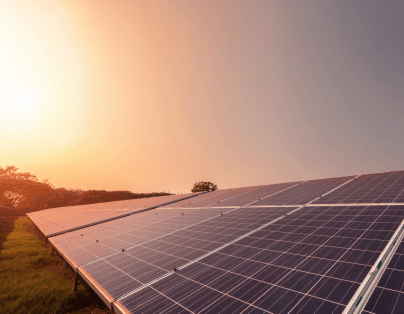
The DG existing in the country comes mostly from solar energy (99%), although there are also other sources such as wind and biomass, for example. In addition to facilitating the arrival of renewable energy in specific regions, DG also brings savings on the electricity bill.
Distributed generation systems are interconnected to the utility grid. Thus, when the generated energy exceeds the total consumed, the surplus energy is fed back into the grid and converted into credits that will be discounted on the next bill. If the generated energy is insufficient, the difference is supplied by the utility company and charged normally on the electricity bill.
Types of distributed generation
Distributed generation has more than one modality defined by law: micro and distributed mini-generation (MMGD). See what each of them means:
Distributed microgeneration: generating plant with an installed capacity equal to or less than 75 kilowatts (kW), which uses qualified cogeneration or renewable sources connected to utility companies.
Distributed minigeneration: generating plant with an installed capacity greater than 75 kW, coming from renewable sources. For dispatchable sources, the capacity can reach up to 5 megawatts (MW) and for non-dispatchable sources, up to 3 MW, connected to utility companies.
The way distributed generation is connected to the consumer also varies, and can be:
Local self-consumption: the surplus of electric energy from the consumer unit is offset or credited in the same consumer unit where the MMGD is installed. This is the case of solar panels installed on residential roofs, for example.
Remote self-consumption: modality in which consumer units obtain energy through the same legal or physical person, being served by the same utility company. In practice, it is like a house that has solar panels and shares the use of credits with other houses belonging to the same owner.
Shared generation: group of consumers composed of individuals or legal entities that constitute a single consumer unit. In this modality, cooperatives share the management and credits of a power plant, allowing savings to be immediate and available to consumers connected to low voltage, so more people can have access to clean energy and save monthly on the electricity bill.
Enterprise with multiple consumer units (EMUC): set of consumer units on the same property, forming a distinct consumer unit. This is the case of large condominiums, for example.
Advantages and disadvantages of distributed generation
Distributed Generation, which has existed since 2012, has many benefits:
Savings: distributed energy generation allows you to reduce the electricity bill. Usual discounts exceed 10% and when considering savings over the years, this number can grow. At Serena, for example, discounts can reach up to 14%, in addition to the first bill free (check conditions and served regions).
Sustainability: DG is strongly tied to solar energy, which has a series of positive aspects in environmental terms, since it is a clean energy source, meaning it does not emit carbon dioxide (CO₂), contributing to the mitigation of climate changes resulting from global warming.
Democratization of access to renewable energy: DG allows consumers without the alternative of installing solar panels on their roofs (inhabitants of large urban centers or apartments, for example) to have the option of benefiting from a renewable energy mechanism, decreasing dependence on thermal power plants.
On the other hand, DG still raises some doubts:
High initial investment: for those who choose distributed generation with local self-consumption, such as installing solar panels on their own roof, for example, the initial cost with projects, equipment, maintenance, and care for the components of this format can be high.
Bureaucracy: some companies that work with distributed generation have not yet been able to optimize negotiations to facilitate the process of joining this modality.
These counterpoints can be solved by choosing Serena's energy. With Serena, there is no initial investment and the contracting steps have been optimized to be simple and uncomplicated. The entire contracting process happens digitally, but in case of doubts, Serena's specialists are ready to assist customers.
What is the difference between distributed generation and centralized generation?
Unlike distributed generation, which generally occurs at the consumption site itself or close to it, centralized generation is done in large-scale power plants, capable of producing energy to be transported over long distances.
According to the National Electric Energy Agency (Aneel), this format has exceeded 200 GW of installed capacity, enabling the reduction of energy costs and optimization of processes.
CG can serve consumers connected to medium and high voltage, while DG is ideal for low-voltage consumers, who cannot yet choose and negotiate the price of energy directly with the energy supplier.
How to reduce electric energy expenses?
Those who are clients of the Regulated Energy Contracting Environment are subject to changes in tariff flags defined by ANEEL, which ultimately impacts the final value of the electricity bill. One of the ways to save on the electricity bill is by opting for appliances with an A rating on the Procel Seal, indicating energy efficiency and thus avoiding energy waste.
On the other hand, there are many homes and businesses that, even by replacing appliances and avoiding energy waste, continue to have high electricity bills. In this context, distributed generation emerges as a viable solution.
Low-voltage customers can achieve up to 14% savings in the first year with Serena. The discount may vary according to consumption and region, and the calculation can be done digitally. Continue reading to better understand how this works.
How to adopt distributed generation to reduce energy costs?
To opt for distributed generation and guarantee savings throughout the entire year, it is important to keep in mind your average monthly energy consumption and identify the utility company responsible for your supply.
After this initial analysis of your own consumption, the next step is to look for a company, like Serena, that offers guaranteed savings. The discount can be calculated by filling out the initial registration on the Serena website or by talking to one of the specialists. Next, you contract the ideal plan and from then on, just enjoy the monthly savings.
Frequently Asked Questions
What is the cost of distributed generation?
The cost of distributed generation can vary according to the format chosen. For those who opt for distributed generation with local self-consumption, there is the cost of installing solar panels, including project development and the purchase of necessary equipment and materials.
On the other hand, in shared distributed generation, as offered by Serena, there is no initial investment or worry about construction and maintenance, guaranteeing much greater savings when compared to other formats.
What is the return on investment time?
In Serena's shared distributed generation format, there is no initial investment and savings begin from the first month, according to the chosen plan.
What is the efficiency of distributed generation?
Distributed generation provides effective savings, as it enables the reduction of the consumer's energy bill even when they are far from the generating plant. Furthermore, it encourages the development of renewable energy, reducing energy consumption costs and reinforcing the commitment to the environment by avoiding the emission of carbon dioxide (CO₂).
Serena's Distributed Generation
Serena's DG operation is already available in most of Brazil. This is because Serena believes in the future of clean and accessible energy, where businesses and homes thrive through 100% renewable energy.
Annual savings can reach up to 14% on the electricity bill, depending on the served region and consumption (check conditions), and contracting can be done digitally or with the help of specialists, without bureaucracy, and by choosing the ideal plan for each customer. Access the website and calculate your savings.
Serena is the energy source of your prosperity.
See also:

Redação Serena Energia
We are part of Serena, one of the country's leading generators and traders of clean energy, with 15 years of experience connecting people and businesses to sustainable and competitive solutions. Here on the blog, you'll find content on the electricity sector, Free Energy Market, sustainability, and energy transition, with clear explanations to support decisions in your daily life, whether at home or in your business.
Editor
Leave a comment
Your email address will not be published. Required fields are marked with *