
Conference of the Parties: what COPs are and what to expect from Brazil at COP 27
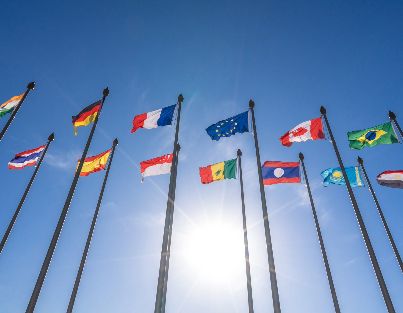
With human impact on nature intensifying and, in turn, the climate crisis becoming increasingly imminent, taking collective measures to curb it has become an urgent global agenda in recent decades.
With that in mind, representatives from various countries gather to discuss how to mitigate and slow down these changes, which put, in many parts of the world, animals, ecosystems and entire populations at risk.
This annual meeting is better known as COP – Conference of the Parties, and it is currently a major symbol of worldwide unity for the climate. But what exactly is the COP and how has the conference impacted countries' actions over the years? Want to understand more about the topic? Keep reading with us!
What is the COP?
COP stands for Conference of the Parties and constitutes the annual meeting of 197 nations, which aims to discuss climate change, as well as possible agreements and solutions to combat it.
The COP is considered the supreme body of the United Nations Framework Convention on Climate Change (UNFCCC) and essentially consists of an agreement ratified by countries and territories that commit to reducing the impact of human activity on the planet.
Since 1995, the signatory parties have met annually to assess the state of climate change on Earth and propose mechanisms to ensure the effectiveness of the measures proposed in the Convention. This year, the twenty‑seventh edition of the COP, known as COP 27, will take place from November 6 to 18, 2022 in Sharm El Sheikh, Egypt.
Who participates in the COP?
In addition to representatives of the signatory countries, such as government delegates, journalists, members of non‑governmental organizations (NGOs) and members of public or private institutions of any legal nature may also attend the Conference, provided they are pre‑registered and authorized by the UNFCCC.
But as one can imagine, reaching consensus among so many stakeholders on the measures to be taken to improve the global climate scenario is neither quick nor easy. Consequently, these meetings last about ten days, filled with numerous parallel sessions.
For each COP edition, it is discussed how far the plans set in previous COPs have been fulfilled and how to improve this dynamic for the future, aiming at the fulfillment of the signatory parties' objectives.
And to facilitate the measurement of the effectiveness of initiatives that slow human impact on the climate, from time to time, the participating countries sign global agreements that establish objectives and targets with specific deadlines.
Once the purposes are defined, each country's role is outlined according to its capabilities. Continue reading to learn more about the main agreements signed from the first COP to the present day.
Kyoto Protocol
The Kyoto Protocol is a global agreement drafted during COP 3 (1997) in Kyoto, Japan, with the aim of setting targets, especially for developed countries, to contain greenhouse gas (GHG) emissions.
More than 175 countries signed the Protocol, which stipulated that the commitments should be met by 2012, a deadline later extended to 2020. This Protocol went through a lengthy accession process, entering into force only in 2005, still without full ratification.
One of the countries that did not join the Protocol was the United States. At the time, the then‑American president, George W. Bush, refused to ratify the document, claiming that the country had no intention of changing its energy matrix, one of the measures required to curb GHG emissions. Moreover, there was also disagreement over the lack of targets for developing nations.
Subsequently, in light of the U.S. refusal, other countries also abandoned the commitments made in the Protocol. Nevertheless, the Kyoto Protocol entered history as the first worldwide treaty to reduce GHG emissions. Eighteen years after its adoption at COP3, it was finally replaced by the Paris Agreement.
Paris Agreement
The Paris Agreement is an international treaty signed in 2015, which to this day serves as a guide for measures taken by signatory countries to curb global warming. With near‑total accession, comprising 193 member countries, it is linked to the UNFCCC and was created to replace the Kyoto Protocol. Despite the deadline set in Kyoto (2020), the Paris Agreement entered into force in October 2016.
The first six years of the Agreement were dedicated to detailing the rules, commitments and mechanisms created to achieve the set objectives. Among them, the goal of limiting the rise in global temperature to no more than 1.5 °C above pre‑industrial levels stands out, as a 2 °C increase was considered by the scientific community as the “point of no return”.
In other words, if the planet’s temperature rises 2 °C above the established baseline, humanity will face devastating and irreversible effects for life on Earth.
Furthermore, the Paris Agreement also ratified standards for reducing GHG emissions, expanding renewable energy and allocating billions of dollars to poor countries to deal with the impacts of climate change.
It is during the COP that the decision‑making process regarding the Paris Agreement takes place. Thus, the conference functions as a kind of general assembly that brings together all parties to the Agreement and ensures the fulfillment of the targets.
Countries' positioning at the COP
In preparation for the sessions, each country's representatives hold a series of preliminary meetings among various sectors and entities to define their stance at the meeting. These preliminary meetings address both their defense of not meeting certain pre‑established objectives from previous COPs and the new proposals the country has devised to combat climate change.
In Brazil, for example, these meetings are led by the Ministry of Foreign Affairs, which conducts them together with other ministries, state governments and NGOs. All of this is to determine how the country will position itself at the COP.
Brazil at COP 27
The country has several targets to meet that were agreed upon in previous COPs. Among them, the reduction of greenhouse gas emissions by 37% by 2025, and 43% by 2030. However, just two months before COP 27, Brazil has still not presented effective actions to fulfill the Paris Agreement and limit global warming to 1.5 °C, as the agreement assumes.
One reason for this situation is the expansion and intensification of land‑use activities, which culminate in deforestation of our biomes. According to data from the Climate Observatory, in just the first three years of Bolsonaro’s government, there was an annual average of 11,405 square kilometers deforested, a number 51 % higher than in 2018, the last year of Temer’s administration, and 75 % higher than the average of the previous ten years (2009‑2018).
The major problem is that forest degradation generates decomposition of organic matter from the soil, which increases GHG emissions and consequently pushes Brazil further away from the goal of reducing emissions and controlling global warming.
In addition to assessing this concerning context, it is also essential to discuss measures to encourage the energy transition. In Brazil, thermoelectric plants generate a large volume of GHG emissions.
In this scenario, considering a transition to renewable matrices such as wind, solar and small hydroelectric power plants constitutes a path to meet the commitments made in the Paris Agreement.
Thus, Serena’s work in generating and commercializing renewable energy and its leadership in the energy transition scenario helps achieve the objectives of COP 27 at the national level.
Moreover, this leadership is also evident in the company's involvement with the United Nations’ 7th and 13th Sustainable Development Goals (SDGs), which pertain to access to clean energy and actions against global climate change.
Major milestones of the COPs over the years
Many events have marked the Conferences of the Parties over the years and have changed how countries combat climate change.
To learn how COP 26 unfolded, access the text below, written on Serena Talks.
COP 26: sustainability for your company
And if you became interested in the possible outcomes of COP 27, which takes place this year, stay tuned to our publications, as we will keep you updated with everything that will be discussed there!

Redação Serena Energia
We are part of Serena, one of the country's leading generators and traders of clean energy, with 15 years of experience connecting people and businesses to sustainable and competitive solutions. Here on the blog, you'll find content on the electricity sector, Free Energy Market, sustainability, and energy transition, with clear explanations to support decisions in your daily life, whether at home or in your business.
Editor
Leave a comment
Your email address will not be published. Required fields are marked with *