
Energy bill: what are the energy tariff flags?
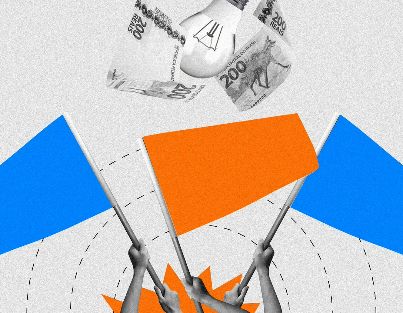
In December 2020, the red flag made the electricity bill more expensive for captive consumers, who have no option to choose energy suppliers. In this sense, we prepared a post to clarify what tariff flags are and the impacts of this increase of R$ 0.06243 for each kilowatt‑hour (kWh) consumed.
The tariff flag system has been in effect since 2015 and is regulated by the Agência Nacional de Energia Elétrica (Aneel). The rules apply to those who are part of the Regulated Contracting Environment (ACR), i.e., captive consumers. In the Ambiente de Contratação Livre (ACL), also known as the Mercado Livre de Energia (MLE), free consumers are exempt from the charge of these tariff flags.
Stay with us to understand what tariff flags are and how electricity generation conditions can impact the bill amount.
But what are tariff flags? And how do they work?
Tariff flags are a system that signals whether there will be an increase in the energy price for end consumers, due to generation conditions, especially of usinas hidrelétricas. For example, in case of lack of rain, reservoirs fall below average. Thus, there may be a change in the flag (green, yellow and red) that appears on the electricity bill, indicating whether electricity will cost more or less during a given period.
According to Aneel, these are the characteristics of each modality:
Green flag: means that energy generation conditions are favorable. Therefore, there is no increase in the tariff;
Yellow flag: shows less favorable energy generation conditions. In this way, the tariff has an increase of R$ 0.01343 per kWh consumed;
Red flag (level 1): represents more costly generation conditions. Hence, there is an increase of R$ 0.04169 in the tariff per kWh consumed;
Red flag (level 2): the second phase of the red flag shows even more costly generation conditions. In this case, the increase in the tariff is R$ 0.06243 per kWh consumed.
How does the tariff flag system work?
According to the calculations of the Operador Nacional do Sistema Elétrico (ONS), Aneel determines which tariff flag will apply for the following month, i.e., whether the cost of energy generation will be higher or not. The exception is the state of Roraima, as it is not part of the Sistema Interligado Nacional (SIN).
To know which tariff flag will be in effect next month, just follow Aneel's announcement on the dates previously released in the tariff flag activation calendar. If the flag is green, no amount will be added to the monthly consumption. Conversely, the yellow and red flags indicate that there will be an increase.
Whatever the flag of the month, it is essential to practice consumo consciente de energia, both for economic reasons and sustainability.
What is the difference between tariff flags and electricity tariffs?
To understand what tariff flags are, it is important to differentiate the concept of flags from the tariffs themselves.
What are energy tariffs? They involve the costs of generation, transmission, and distribution of energy, as well as sectoral charges;
What are tariff flags? This is a system that adds variable costs, applied additionally to tariffs, according to energy generation conditions.
Why do tariff flags not apply to the Free Energy Market?
The costs related to energy purchase (by the distribuidoras) are included in the tariff adjustment and then passed on to captive consumers.
This does not happen in the MLE, because free consumers can choose their suppliers and agree in advance on their contractual conditions, including price.
Thus, the tariff flag values correspond only to the Regulated Contracting Environment, which is the Captive Energy Market. Moreover, those who have already migrated to the Free Energy Market enjoy several advantages, including:
Freedom to choose suppliers and energy sources, including clean and renewable ones;
More competition among marketers and energy generators, which increases service efficiency and reduces prices;
Flexibility to make contracts between parties without regulator interference;
Predictability of electricity costs, knowing how much you will pay per MWh consumed.
Indeed, the free market is a global trend. In countries like the United Kingdom, this is already a reality, even for households. In Brazil, the government announced technical studies focused on the ampliação do acesso ao MLE para consumidores residenciais, which is currently available for companies with high energy consumption demand.
There you go, now that you know what tariff flags are, how about entrar em contato com a Serena to find out if your company can already migrate to the Free Energy Market? That way you can save, invest in sustainability, and no longer worry about tariff flags.
Calculate your savings potential and join Serena's prosperity network!

Redação Serena Energia
We are part of Serena, one of the country's leading generators and traders of clean energy, with 15 years of experience connecting people and businesses to sustainable and competitive solutions. Here on the blog, you'll find content on the electricity sector, Free Energy Market, sustainability, and energy transition, with clear explanations to support decisions in your daily life, whether at home or in your business.
Editor
Leave a comment
Your email address will not be published. Required fields are marked with *