
Water crisis and appreciation of renewable energies
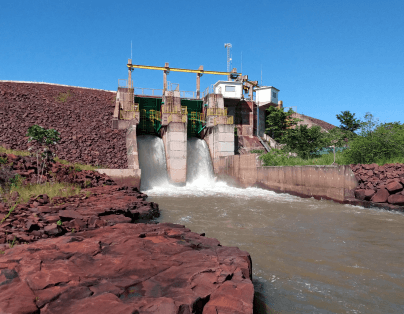
Special article written by Bernardo Bezerra, Director of Innovation, Products and Regulatory at Serena and Raphael Carvalho, Strategic Regulation and Market Intelligence Manager at Serena.
Energy matrices
The diversification of energy matrices is becoming increasingly present and important worldwide with the development of renewable energies and, in particular, in Brazil facing a scenario of water scarcity that has raised an alert signal in the country's hydroelectric plants, which are the main sources of electricity generation.
Also in this scenario, we have been able to follow all the steps taken for the privatization of Eletrobrás, a highly anticipated move in the sector. However, the provisional measure sanctioned for this project included a surprising requirement: the obligation to contract a significant amount of natural gas‑fired thermoelectric plants in the North, Northeast, Midwest and Southeast.
Even in a scenario where we need emergency energy alternatives, this initiative represents a setback. This view is shared by renowned sector specialists such as José Goldemberg of the University of São Paulo, Luiz Eduardo Barata, former General Director of the National Electric System Operator, and Amanda Ohara of iCS (Institute Climate and Society), a philanthropic organization that aims to promote, among other aspects, low‑carbon development in Brazil.
Results of the iCS (Institute Climate and Society) study
A recent study coordinated by the group brings some necessary warnings for Brazilian society. The main one is that the country cannot forgo a structured plan for the electric sector.
After all, it is the foundation for the development of a sustainable and economically efficient economy – especially if we consider the forecast of a 5.3% GDP growth, driven by economic recovery with the pace of population vaccination.
The electric system expansion alternatives included in Eletrobrás' provisional measure are not the best in any aspect. In addition to being more costly than the solutions outlined in the Energy Ten‑Year Plan prepared by the Ministry of Mines and Energy, they will increase greenhouse gas emissions (an increase of more than 80% of the emissions projected for 2030 in the sector).
We need long‑term solutions that make the system safer and more resilient, without significant tariff increases for consumers. And for that, there are more suitable solutions.
The study organized by iCS reflects on the best options for long‑term thinking for the energy segment, and one of them deserves emphasis: the processing of the Electric Sector Reform bill should be prioritized in the Chamber of Deputies.
Approved by the Senate's Infrastructure Committee in March 2020, the bill remained stalled in the house until February 2021, and currently awaits the dispatch of the President of the Chamber of Deputies, Arthur Lira. The massive integration of solar and wind sources requires a series of adaptations to the sector's legal and regulatory framework, largely addressed in this bill.
Another important point in the material presented by the researchers indicates that the planning of Brazil's energy sector needs a set of analyses and studies carried out by specialized professionals. This structure already exists, is available, and this knowledge needs to be employed, as the current context presents urgent challenges.
Furthermore, we need to review the role of hydroelectric generation in the Brazilian system. It has been and continues to be very important for meeting the country's energy demand, but this potential needs to be harnessed to accommodate the ever‑increasing penetration of new renewables (solar and wind) and preserve other water uses, in full synergy with the agencies responsible for environmental preservation.
The iCS report also shows that it is essential to deepen the discussion on valuing the demands of Brazil's energy system by different generation and electricity consumption characteristics.
The sector lacks appropriate economic signals that would allow the competitive entry of the most effective technologies. Adequate incentives are needed for technologies that bring value to a system burdened by a high amount of cross‑subsidies in the sector, which also require revision.
To make this possible, planning methodologies need to be adapted to represent the system appropriately, explicitly accounting for flexibility resources and integrating energy and electric studies.
Reverse path
Against this vision shared by all countries worldwide, which values renewable energies complemented by flexible generation and storage solutions, such as hydroelectric plants, governed by system needs, the mandatory contracting of thermoelectric plants in the law that privatized Eletrobrás placed their installation far from the country's energy demand, in locations lacking fuel supply points and operating inflexibly, which, besides increasing emissions, restricts the penetration of more renewable, sustainable, and cheaper energies.
In parallel, the government had already scheduled throughout the year a series of auctions for contracting flexible thermoelectric plants, such as the capacity auction planned for December this year. With the law's approval, it becomes essential to revisit the original planning of this auction to avoid excessive contracting of thermoelectric plants (double counting).
Even the transmission planning must be revised to accommodate the need to evacuate these thermoelectric plants. All this at a time when renewable wind and solar generation has often been constrained by a lack of evacuation capacity.
A possible future
This comprehensive and necessary study, conducted by independent and renowned energy sector specialists, shows that we will only be able to face the water crisis by valuing renewable energies.
It is also important to emphasize that the document goes far beyond rhetoric and points to concrete and feasible paths for diversifying our energy matrix and consequently valuing renewables.
However, it is necessary for all of society to commit to this path. Companies in the sector and scholars have done their part, no doubt. The adoption of ESG investment criteria worldwide also makes the adoption of renewables an irreversible path.
Nevertheless, it is necessary to hold all agents, including the government, accountable for the necessary commitment so that we can live in a fairer society with clean, cheap, simple, and transformative energy generation.

Redação Serena Energia
We are part of Serena, one of the country's leading generators and traders of clean energy, with 15 years of experience connecting people and businesses to sustainable and competitive solutions. Here on the blog, you'll find content on the electricity sector, Free Energy Market, sustainability, and energy transition, with clear explanations to support decisions in your daily life, whether at home or in your business.
Editor
Leave a comment
Your email address will not be published. Required fields are marked with *