
How do companies save up to 20% on energy?
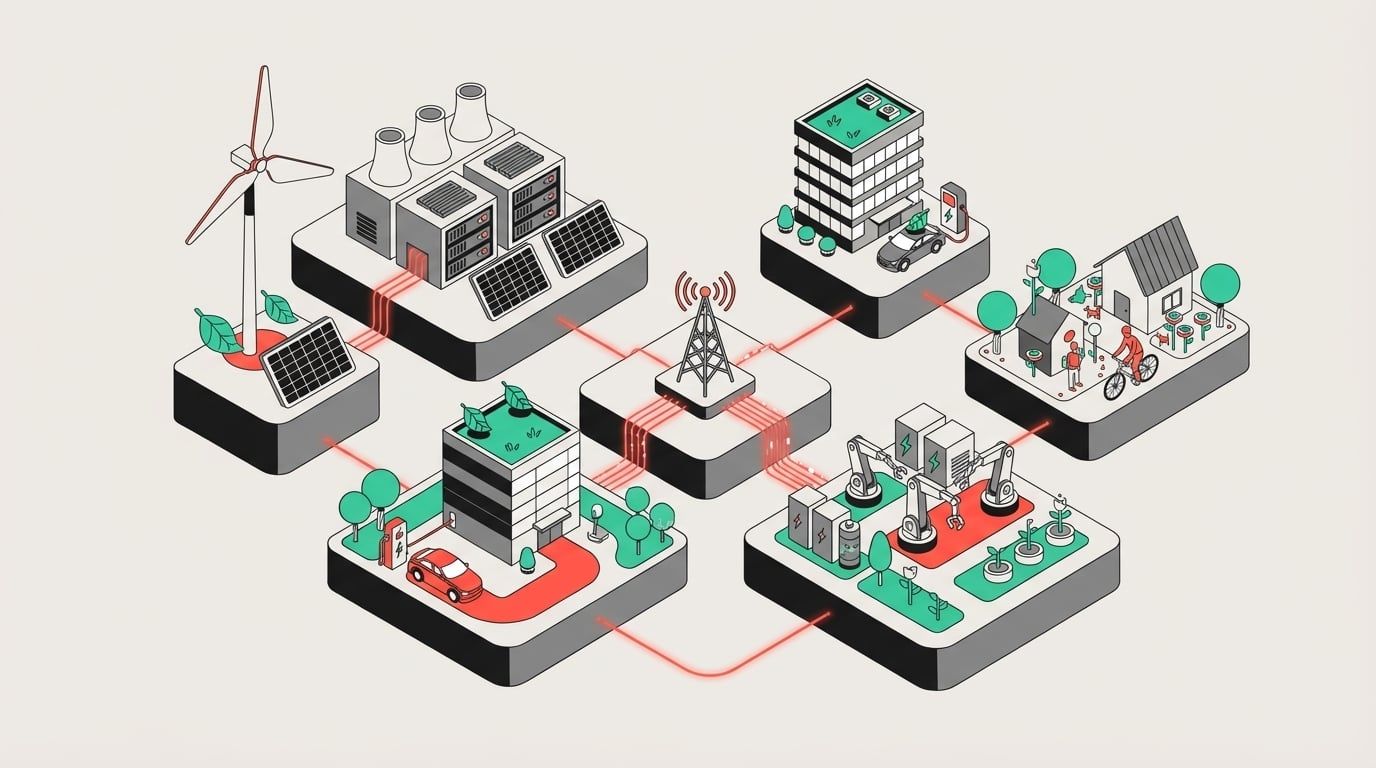
Written by: André Lima, Growth, Serena Energia
Main lessons from this article
- Group A companies can migrate to the free energy market with no minimum consumption, eliminate tariff flags and have cost predictability.
- The migration takes 6 months, with the entire bureaucratic process managed for free, including registration with CCEE (Electric Energy Commercialization Chamber) and meter installation.
- Combining migration with energy efficiency, such as LED use and peak management, can generate additional savings.
- Serena Energia's renewable energy offers I-RECs to offset emissions and strengthen corporate sustainability strategy.
- Migrating to the free energy market with Serena Energia generates savings of up to 20%. Request your free consumption analysis to identify your company's savings potential.

Why companies suffer from energy costs and how to diagnose?
Companies in the regulated market face frequent adjustments and tariff flag charges that raise costs unpredictably. This instability hampers long‑term financial planning and reduces business competitiveness.
To diagnose the energy impact on your company, review the invoices from the last 12 months and identify monthly consumption in kWh, demand peaks, the percentage that energy represents in total operating costs, and seasonal consumption patterns. Companies that consume energy at medium or high voltage, classified as Group A, can immediately migrate to the free energy market.
The table below summarizes the main differences between contracting models and shows how Serena Energia enhances predictability, savings, and sustainability for small businesses:
|
Aspect |
Regulated market |
Free energy market, with Serena Energia |
|
Predictability |
Low, with tariff flags |
Full, with contractually agreed prices |
|
Savings |
Limited |
Up to 20% |
|
Sustainability |
Mixed energy matrix |
100% certified renewable energy |
To understand your company's cost‑reduction potential, request a free analysis of your consumption profile.
The best strategy: migration to the free energy market with Serena Energia
Migrating to the free energy market allows contracting fixed prices, eliminating tariff flags and accessing renewable energy. The free energy market has expanded in recent years and now serves a growing number of commercial and industrial companies seeking greater control over their costs.

Many small businesses still consider this process complex and far from their reality. Serena Energia reduces this barrier by organizing the migration in 7 structured steps for 2026:
- Eligibility verification: confirm whether the company is in Group A, at medium or high voltage, with no minimum consumption requirement.
- Consumption profile analysis: map in detail the monthly consumption and demand patterns throughout the year.
- Choosing Serena Energia: contract one of the largest wind and solar generators created in the Americas.
- Registration with CCEE (Electric Energy Commercialization Chamber): conduct the registration process at no additional cost for clients managed by Serena Energia.
- Contract negotiation: define a supply agreement with potential savings of up to 20% compared to the regulated market.
- Metering implementation: install hourly metering equipment at no additional cost for clients managed by Serena Energia.
- Continuous monitoring: monitor performance monthly with support from a dedicated consultant to adjust strategies and results.
During the 6‑month regulatory period, Serena Energia takes charge of all bureaucracy for clients under its management.
The company also offers a digital platform that allows tracking of monthly bill savings, consolidated savings (total saved to date), invoice breakdown comparing captive and free markets with Serena, monthly consumption forecast, and consumption to date.
To start the supplier change process, start your migration today and schedule savings for the coming months.
Practical energy efficiency tips to boost savings
Combining migration to the free energy market with energy efficiency actions increases the financial impact for small businesses. The following measures help reduce consumption without compromising operation:
- LED replacement: reduce energy consumption with lighting.
- Preventive air‑conditioner maintenance: clean filters, check seals and ensure efficient equipment operation.
- Peak‑time management: schedule equipment to operate outside high‑demand periods, when cost tends to be higher.
- System automation: install presence sensors and timers to turn off loads when not in use.
- Consumption monitoring: track daily usage with smart meters and identify waste.
- Team training: guide employees on simple daily energy‑saving practices.
- Thermal insulation: improve building insulation to increase cooling and heating efficiency.
When implemented together, these actions reduce baseline consumption, avoid unnecessary peaks and keep equipment operating only when needed. Combined with the savings obtained from contracting with Serena Energia, these practices can generate additional reductions in total energy costs.
Sustainability as a competitive differentiator with Serena
Contracting energy with Serena Energia allows the company to use predominantly wind sources and receive Renewable Energy Certificates, the I-RECs, which verify the renewable origin of the electricity consumed. The growth of renewable generation capacity in Brazil reinforces the relevance of this choice for business strategy.

Since 2017, Serena Energia has avoided the emission of more than 2.14 million tonnes of CO₂ by providing renewable energy to its customers. I-RECs allow recording this reduction in Scope 2 emissions, strengthening sustainability reports, climate targets and brand positioning with customers, investors and partners.
Success cases and proven numbers from Serena
Serena Energia serves client
of different sizes, from growing SMEs to large brands across various sectors. With 17 operational plants and capacity to supply the equivalent of 4.2 million households, the company demonstrates scale, robustness, and long‑term service capability.
One example is Casa Santa Luzia. “Prices have always been extremely competitive. There is also the sustainability and service aspect, which we already knew, and the trust. Those were differentiators for us at the time of renewal,” highlights Guilherme Lopes Sobral.
The company has recorded an 11‑fold increase in installed capacity since 2017 and has become a benchmark in renewable energy across the Americas.
Common risks and how Serena mitigates everything
Entering the free energy market requires comparing suppliers, evaluating products, and understanding contractual models, which poses a challenge for many SMEs. Serena Energia reduces this risk by offering full management of the process, from documentation at the CCEE (Electric Energy Commercialization Chamber) to monthly performance monitoring after migration.
The company assumes operational responsibilities that would normally fall on the client and offers contractual flexibility for consumption variations of up to 10%, as per the contract. This flexibility is possible thanks to Serena Energia's own generation portfolio, which ensures stable supply even during periods of higher demand.
Conclusion: next steps for your savings
Migrating to the free energy market with Serena Energia represents a concrete opportunity for small businesses to reduce operational costs, gain budget predictability, and advance sustainability. With a free‑managed process and a potential savings of up to 20%, the decision to migrate becomes a direct lever for competitiveness.
To turn energy spending into a business advantage, discover your potential savings now and take the next step in strategic energy management.
FAQ: common questions about energy savings in small businesses
What is the free energy market in practice?
The free energy market allows companies to choose their electricity supplier and negotiate price, term, and contractual conditions. The local distributor remains responsible for physical delivery via the electric grid, while the company starts purchasing energy from generators such as Serena Energia, with more competitive commercial terms.
Can my small business migrate to the free energy market?
A small business can migrate if it is served at medium or high voltage, in Group A. There is no minimum consumption required. Serena Energia conducts a free eligibility analysis to verify whether the company meets the necessary technical criteria for migration.
How long does the migration process take?
The regulatory process takes 6 months due to the legal notice period for terminating the current contract with the distributor. As explained earlier, during this period Serena Energia manages all bureaucratic steps at no additional cost, including registration with the CCEE (Electric Energy Commercialization Chamber) and adjustment of the metering system.
Is there a risk of losing power during migration?
There is no risk of supply interruption during migration. The change occurs only in the commercial and contractual realm. The local distributor remains legally responsible for the quality and stability of the electric grid. The only change is the supplier from whom the company purchases energy, not the way the energy reaches the consumer unit.

André Lima
We are part of Serena, one of the country's leading generators and traders of clean energy, with 15 years of experience connecting people and businesses to sustainable and competitive solutions. Here on the blog, you'll find content on the electricity sector, Free Energy Market, sustainability, and energy transition, with clear explanations to support decisions in your daily life, whether at home or in your business.
Editor
Leave a comment
Your email address will not be published. Required fields are marked with *