
Does solar energy in agribusiness work? Find out if it pays off and alternatives
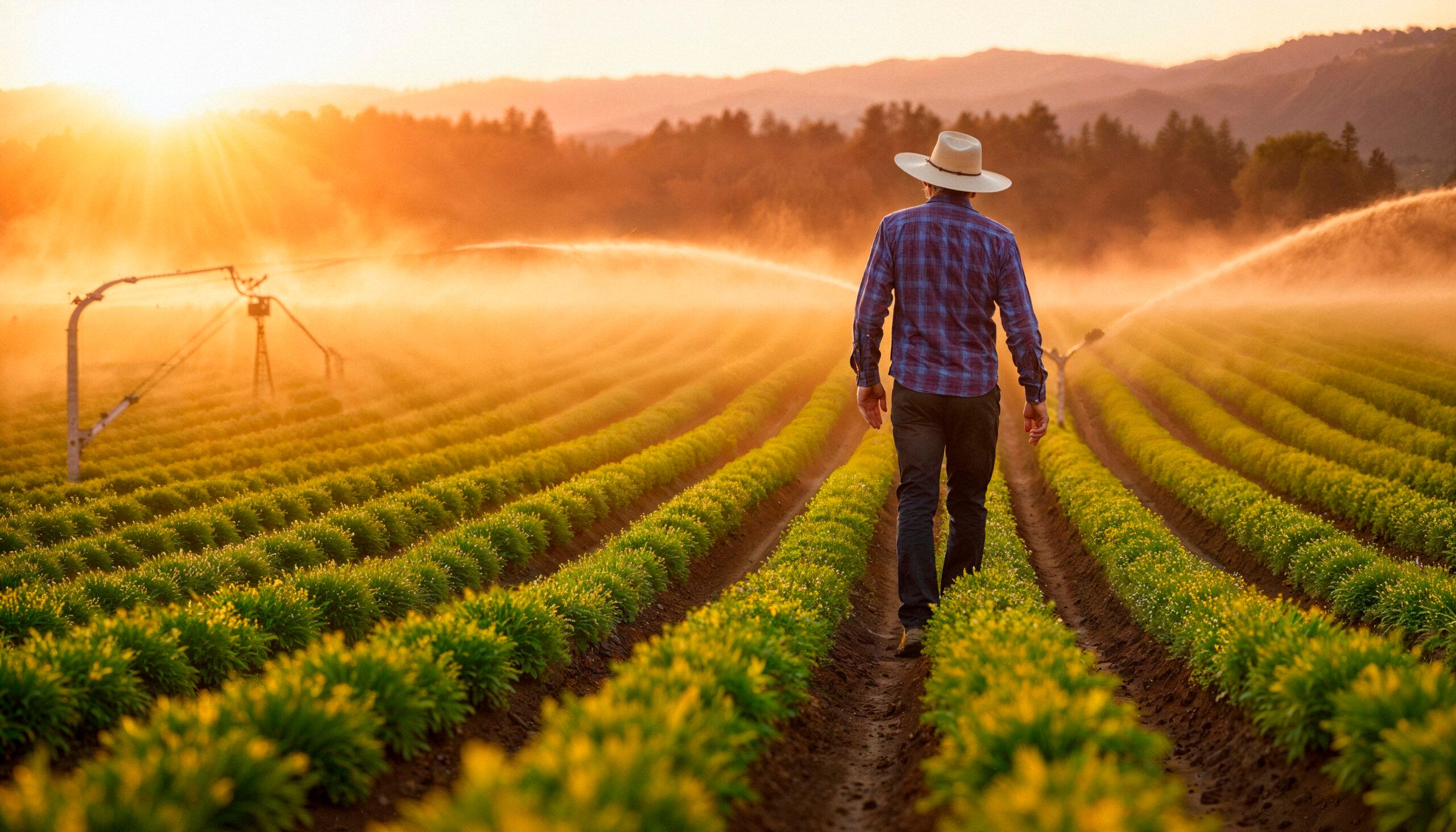
The electricity bill has become one of the most sensitive costs in agriculture, especially where there is irrigation, pumping, ventilation, storage, milk refrigeration, and cold rooms. When the tariff rises or consumption fluctuates with the harvest, the impact shows up directly on the margin.
That is why solar energy in agribusiness is no longer just a sustainability topic and has become a management decision: reducing costs, gaining predictability, and lowering exposure to tariff adjustments. The core issue is not whether it works, but rather which path makes sense for your profile, without requiring construction work on the property or adding operational complexity.
In this post, you will understand what to look for in your bills, in which scenarios solar energy in agribusiness tends to pay off, and how to make a safer decision with practical criteria and realistic expectations.
Does solar energy work in agribusiness?
It certainly works, but it depends on the consumption profile, the type of grid connection of the consuming unit, and the goal of the producer or company. In some operations, the best result is reducing monthly expenses. In others, the main gain is predictability to plan the harvest, storage, irrigation, and cash flow. There are also those who prioritize environmental goals and ESG reports, as long as the financial bottom line works out.
Another important point: solar energy in agribusiness is not exclusive to large farms. Size helps, but what weighs most is the combination of consumption, regularity (or seasonality), and the chosen model. A smaller unit, with well-defined and recurring consumption, can capture relevant benefits. On the other hand, a larger operation, but with very irregular consumption and no organized history, usually has more difficulty contracting the best solution right from the start.
It is also worth breaking a myth that blocks decisions: seeking savings associated with solar energy does not necessarily mean installing a system on the farm. Today, there are models where energy is generated in plants connected to the grid, such as Distributed Generation and the Free Energy Market, and the benefit appears on the bill through credit compensation, without any construction work on the property.
Practical applications in agribusiness
Energy weighs heavily in agriculture wherever there is a motor, pump, refrigeration, or continuous processes. Understanding where it lives within the operation helps gauge priority, urgency, and the type of strategy.
Check out typical applications where the bill tends to be significant and where it makes sense to analyze solar energy in agribusiness through models without construction on the property:
Irrigation and pumping: high consumption in dry periods and sharp peaks dictated by harvest and weather, making financial predictability especially valuable;
Storage and post-harvest: ventilation, drying, and handling increase expenses during short windows, when planning energy costs prevents surprises in cash flow;
Refrigeration and the cold chain: milk, fruit, meat, and cold rooms require continuous consumption, which favors analyses based on history and stability;
Poultry and swine farming: ventilation, heating, and automation increase consumption and demand regularity, which usually values solutions with predictability;
Processing and agro-industry: production lines, motors, and shifts increase the complexity of the bill and may open room for contractual strategies, depending on the classification.
In practice, the better you can describe your consumption (when it grows, why it grows, and how much it grows), the better the decision regarding the model will be.
Alternatives to "panels on the farm": how to save with Serena
If your priority is to save money and gain predictability without installing panels, two paths stand out depending on the profile of the consuming unit: Distributed Generation and the Free Energy Market. Serena steps in as support to turn the electricity bill into a management decision, providing bill reading, classification checks, and recommendations aligned with your consumption.
If the operation is in medium/high voltage (Group A): Free Energy Market
Many agricultural operations with robust irrigation, large-scale storage, or significant loads operate at medium or high voltage, the so-called Group A. In these cases, it may make sense to evaluate migrating to the Free Energy Market, where energy purchasing is done through a contract, with negotiated conditions such as price, term, and volume.
The Free Energy Market tends to be more interesting when the main pain point is predictability and price risk management. It does not work as an automatic discount. It works as a change in the purchasing environment, offering more strategic possibilities, which requires historical analysis and monitoring (internally or with a partner).
If the priority is to have solar benefits without installing anything: Distributed Generation
If the goal is to access benefits associated with solar energy in agribusiness without construction work on the property and without capital expenditures on panels, Distributed Generation (DG) is usually the most direct path. In this model, energy is generated in plants connected to the grid, and compensation appears on the bill through energy credits, according to current regulations.
DG stands out in agriculture because it reduces operational friction. Instead of dealing with construction and maintenance on the property, decision-making relies on a contract, consumption history, and an understanding of how credits impact the bill.
Whichever you choose, count on Serena to bring clean energy to agribusiness
Now that you understand both paths, the safest recommendation is simple: start with your bill and your consumption profile. Instead of trying to fit your operation into a ready-made solution, the ideal approach is to use your history as a basis to decide with clarity and reduce contracting risk.
In addition, you can also simulate your electricity bill savings on our platform! This makes it easier and more tangible to choose the best solution for your agribusiness.

Redação Serena Energia
We are part of Serena, one of the country's leading generators and traders of clean energy, with 15 years of experience connecting people and businesses to sustainable and competitive solutions. Here on the blog, you'll find content on the electricity sector, Free Energy Market, sustainability, and energy transition, with clear explanations to support decisions in your daily life, whether at home or in your business.
Editor
Leave a comment
Your email address will not be published. Required fields are marked with *