
Solar energy for industry: operation and advantages
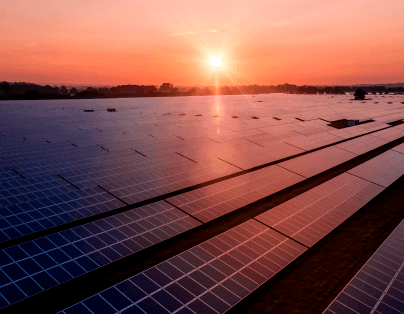
When following the news about the Free Energy Market it is possible to notice that solar energy for industry is becoming a more popular and advantageous option.
To give you an idea, according to the InfoMercado report – February 2020, published by CCEE, the monthly generation of photovoltaic energy increased from 479 MWm in 2019 to 614 MWm in 2020. The increase represents a 28.2% growth and is the energy source with the highest growth in the period. In addition, the report also points to a 20% reduction in thermal energy consumption.
Even without a deep knowledge of this market and its variables, it is already possible to see how impactful the growth of photovoltaic energy generation in Brazil is, isn’t it?
If you want to learn more about solar energy for industry, keep reading this article and discover the trends and advantages of using this type of source. Happy reading!
Energy consumption in industry: the scenario in Brazil
Energy consumption in society indicates how economic development and people’s quality of life are progressing. In industries, it says a lot about their activity pace. Developed countries, for example, tend to opt for more energy‑efficient equipment that consumes a lower volume of energy.
Moreover, they leave energy‑intensive activities such as steelmaking and aluminum production to developing nations.
The BEN – National Energy Balance – 2019 report shows that the Brazilian industrial, residential and commercial sectors together consumed 80% of the electricity supplied in the country in 2018. Industries alone were responsible for 37.5% of this consumption, with only minimal changes in this percentage over the last four years.
From 2017 to 2018, this increase was 0.6%, due to the impact of higher physical production in the steel industry (ferro‑alloys, steel and pellets).
Expansion of photovoltaic solar energy in Brazil
The expansion of installed photovoltaic solar capacity is a good indicator of this growth: from 935 MW installed in 2017, solar energy reached 1,798 MW in 2018 — almost double.
But beyond being an excellent alternative for environmental preservation, does solar energy also provide cost reductions for industries? You will find out in the next section, where we discuss the main advantages of its use and how to start implementation.
Economy: how does industry save resources by using solar energy?
Finding ways to save on electricity in industry is every entrepreneur’s wish, since it is one of their highest expenses. The opportunity to reduce this cost lies in the Free Energy Market.
There, you can contract solar energy for your industry at prices and other commercial conditions negotiated bilaterally, directly with the generator or energy trader of your choice.
By moving to the Free Energy Market, you can also enjoy another important advantage: cost predictability. This means knowing exactly how much the electricity bill can represent in your company’s budget, without worrying about possible variations common in the regulated market.
Advantages of solar energy for industry
There are many advantages of solar energy for industry. When acquiring this energy through the Free Energy Market, they become even more evident. Learn each of them in detail below:
Ability to choose suppliers
The power of supplier selection is one of the great differentiators of the Free Energy Market. This provides more competitiveness to the sector and, consequently, continuous improvements in offers and services.
When looking for a solar energy supplier, consider one with the most expertise on the subject and that inspires confidence, offering excellent service and a good reputation. At Serena, for example, we have the Pirapora Complex, located in the state of Minas Gerais. It is the largest operating solar plant in Brazil, with an installed capacity of 321 MW.
Cost predictability
Obtaining solar energy for industry through the Free Energy Market allows you to work with controlled costs, forecasting expenses and negotiating short‑, medium‑ or long‑term contracts with fixed values.
When signing a contract with a supplier, whether a generator or energy trader, the consumer does not need to worry about changes in the energy tariff set by ANEEL and can therefore have better financial planning for their business.
Possibility to negotiate prices and adjustments
Consuming energy in the Free Energy Market gives users total freedom to negotiate offered prices and contractual conditions with supplying companies. Depending on the type of energy chosen, for example, it is possible to obtain discounts on TUSD (Distribution System Use Tariff) and optimize costs.
However, to achieve the best negotiation, it is essential to know your company’s consumption profile. This means conducting a thorough analysis, understanding where you can reduce your electricity bill.
More competitive prices
Did you know that migrating to the Free Energy Market can represent a 34% savings on the average energy tariff value? This happens because, in the Free Contracting Environment, there are savings from the absence of tariff flags and the client pays a single price for energy at any time (there are no different costs during peak and off‑peak hours, as in the Regulated Contracting Environment).
Investing in solar energy for industry in the Free Energy Market can represent a major step toward a more sustainable management for your company.
To learn about Serena’s solutions and clarify all doubts, visit the site. Join the prosperity network!

Redação Serena Energia
We are part of Serena, one of the country's leading generators and traders of clean energy, with 15 years of experience connecting people and businesses to sustainable and competitive solutions. Here on the blog, you'll find content on the electricity sector, Free Energy Market, sustainability, and energy transition, with clear explanations to support decisions in your daily life, whether at home or in your business.
Editor
Leave a comment
Your email address will not be published. Required fields are marked with *