
Understand what wind energy is and what its advantages are
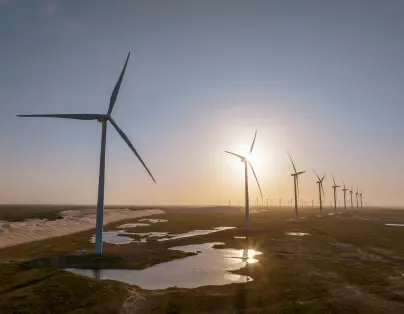
Perhaps you have already heard that Brazil is a world power when it comes to wind energy generation. Believe it, this is true. In 2022, the Global Wind Energy Council Report ranked the country as the 6th largest in the world in onshore wind energy installed capacity.
This represents progress, as the country has moved up in the rankings in recent years. 10 years ago, we were in 15th place, as reported in a CNN article.
Furthermore, Brazil has some of the best winds in the world and has more than 20 GW of installed wind capacity. In practice, this considerably reduces CO₂ emissions, contributing to sustainable development goals.
Given the growing concern about climate change worldwide, a figure like this draws attention. Therefore, it is important to understand how wind energy is generated and what the advantages of this renewable energy source are. Check it out!
What is wind energy?
Wind energy is energy generated by the force of the winds. In practice, it is a source of renewable energy that has a low environmental impact and has been one of the main topics in major climate debates around the world.
In this process, energy is generated through wind turbines or wind generators. This machinery transforms kinetic energy, related to the movement of the blades, into mechanical energy, which is finally converted into electrical energy in a generator.
Installations for producing this type of energy can be on land (onshore power plants) or at sea (offshore power plants). Everything will depend on wind conditions and available infrastructure.
How does wind energy work?
To obtain this precious source of energy, large and heavy structures known as wind generators or wind turbines are needed. They look like large fans, with three blades connected to a shaft.
The operation of the wind energy capture process goes through three main stages:
1) Wind capture: when the wind blows against the wind turbine's blades, they make the central shaft spin. The shaft is connected to a generator, and the amount of energy generated is determined by the speed and force of the winds;
2) Conversion of mechanical movement: the movement of the blades is transmitted to the shaft, which makes the generator work. The generator is responsible for transforming mechanical energy into electrical energy;
3) Electricity distribution: the energy produced in the generator is sent to transformers, which adjust the voltage. Thus, electricity is safely directed to the power grid, where it will supply homes, industries, and businesses.
What is onshore energy?
Onshore wind energy is the type of energy produced on land and represents 11% of the electrical matrix generated in Brazil.
In most cases, wind farms are built in regions far from the coastline. One example is the Ventos da Bahia Wind Complex, located between the municipalities of Bonito and Mulungu do Morro, in the interior of the state.
Currently, onshore production is the most common type of wind energy in Brazil, especially in the Northeast and South regions of the country.
What are the benefits and advantages of wind energy?
In environmental and economic terms, wind energy is one of the major highlights in renewable energy production around the world. This occurs because there are several benefits associated with the use of this type of energy.
Discover the main advantages of wind energy:
It is a source of clean and renewable energy: because it is generated through the force of the winds, wind energy is considered renewable. It is also clean because it does not emit polluting gases into the atmosphere and does not depend on fossil fuels to be generated;
It does not contribute to pollution: wind energy generation does not emit CO2 (carbon dioxide) and CO (carbon monoxide) gases, which directly influence climate changes, such as the increase in the planet's temperature;
It has low operational cost: wind energy is considered attractive by the market because it has a low maintenance cost compared to other energy sources. It also does not generate fuel costs, since it relies solely on the wind;
It causes positive social impacts: especially in Brazil, wind farms are built in small cities. The arrival of this type of enterprise boosts the local economy, creates new jobs, and in some cases can also bring social projects.
Speaking of social projects, this is the case of the Janela para o Mundo Institute, founded in 2022 by Serena.
Its purpose is to seek meaningful and sustainable change through educational initiatives and social projects for income generation in the communities where it operates.
Current scenario of wind energy in Brazil
Currently, wind energy in Brazil occupies the third position in the ranking of largest energy generators. It trails only hydroelectric energy and photovoltaic solar energy.
Energy generated through the winds stands out especially in the Brazilian Northeast, a region where winds tend to be more stable and intense. Consequently, this is where 80% of Brazilian wind farms are located.
And the scenario in the rest of the world?
Building a sustainable future based on equality and diversity is a challenge for the entire world. Therefore, the United Nations (UN) created the Sustainable Development Goals, also called SDGs.
Among the 169 global targets, one of them is the generation of clean and sustainable energy in an affordable way. This is just one of the reasons why several countries and companies invest in renewable energies, such as wind energy.
According to the Global Wind Energy Council (GWEC), the leading countries in installed capacity for onshore energy generation are: China (310 GW), the United States (134.3 GW), and Germany (56.8 GW).
Some disadvantages of wind energy
Every energy source has its advantages, but it also presents challenges. In the case of wind energy, these are usually associated with environmental impacts and dependence on the will of nature. In summary, the disadvantages are:
Intermittency: as it is a natural resource, the presence of wind can be variable. This can cause fluctuations in electricity production, which may require strategic planning for energy storage or combination with other renewable energy sources;
Visual and noise disturbance: in residential areas, visual disturbance and the noise generated by the blades can bother the local population;
Environmental impact on local fauna: accidents involving birds, bats, and other animals that collide with wind turbine blades are not uncommon. However, new technologies and studies are already being introduced to mitigate this problem.
These disadvantages are surmountable and do not diminish wind energy's shine as a renewable and clean energy source. It is an important step toward promoting a sustainable future, with long-term benefits for the planet and future generations.
Found the use of renewable energy interesting? Your business or home can also have access to 100% clean energy sources. Calculate your savings with Serena.
Liked the content? Also check out:

Redação Serena Energia
We are part of Serena, one of the country's leading generators and traders of clean energy, with 15 years of experience connecting people and businesses to sustainable and competitive solutions. Here on the blog, you'll find content on the electricity sector, Free Energy Market, sustainability, and energy transition, with clear explanations to support decisions in your daily life, whether at home or in your business.
Editor
Leave a comment
Your email address will not be published. Required fields are marked with *