
Brazilian energy matrix: what it is and how it is composed
Every country has an energy matrix as one of the pillars of its economy, and Brazil is no different. It helps explain how energy is generated, distributed, and consumed, influencing everything from transportation and food preparation to the operation of industries and services.
Brazil stands out for having a diversified matrix with a high presence of renewable sources, which increases system resilience and reduces emissions when compared to countries more dependent on fossil fuels. According to the most recent consolidated data from the National Energy Balance (BEN), renewable energy accounts for 50.0% of the Brazilian energy matrix (Total Energy Supply).
Want to understand how this works in practice and what changes in consumption and opportunities for clean energy? Follow the guide.
What is the Brazilian energy matrix?
The energy matrix is the combination of energy sources used in a country to meet energy demand, which can come from the residential, commercial, industrial, transportation sectors, and others. It includes energy used to generate electricity, produce heat, and fuel vehicles and machines.
In Brazil, the most widely used reference report for this picture is the BEN, published by EPE, which consolidates and organizes energy sector statistics.
What is the difference between the energy matrix and the electricity matrix?
The energy matrix considers all energy sources used in the country (including fuels and thermal energy), while the electricity matrix considers only the sources intended for electricity generation.
This means that the electricity matrix is part of the energy matrix, but does not represent the whole. In practice, this difference avoids common confusion, such as thinking that "Brazil is 100% renewable" just because electricity has a high share of renewables.
What is the composition of the Brazilian energy matrix?
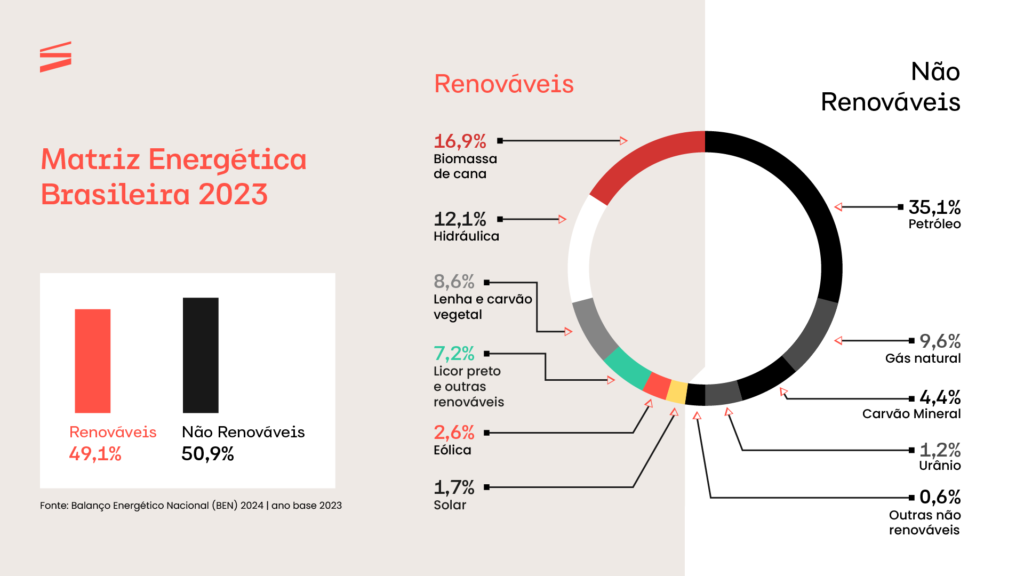
The Brazilian energy matrix is considered one of the cleanest in the world, according to the National Energy Balance released by the Ministry of Mines and Energy. In 2023, most of the energy used in the country came from renewable energy sources.
Considering the BEN data, the Brazilian energy matrix is composed as follows:
Hydroelectric power: the most abundant renewable energy source in Brazil due to the presence of large hydroelectric power plants, such as Itaipu. It uses the force of water dammed in reservoirs to move turbines and generate energy;
Wind power: energy obtained from the force of the winds, captured by wind turbines and converted into electricity. It is also a renewable and clean energy source with great potential in Brazil, especially in the Northeast region;
Solar energy: also obtained from a natural source, solar radiation. In Brazil, sunlight incidence is one of the highest in the world, making this renewable energy source advantageous for the Brazilian energy matrix;
Biomass: using organic materials, such as agricultural waste and bagasse, this renewable energy source is very popular in Brazil, mainly due to sugarcane. Biomass is also used for fuel production, such as biodiesel and ethanol;
Natural gas: a non-renewable energy source widely used in Brazil, especially in thermoelectric power plants. It is also used as fuel in industries, commerce, and homes (in the form of cooking gas);
Oil and derivatives: gasoline, diesel, and kerosene play an important role in Brazil, especially in the transportation sector. However, they are considered fossil fuels, and their burning releases greenhouse gases, contributing to global warming and other types of environmental impact.
What is the composition of the global energy matrix?
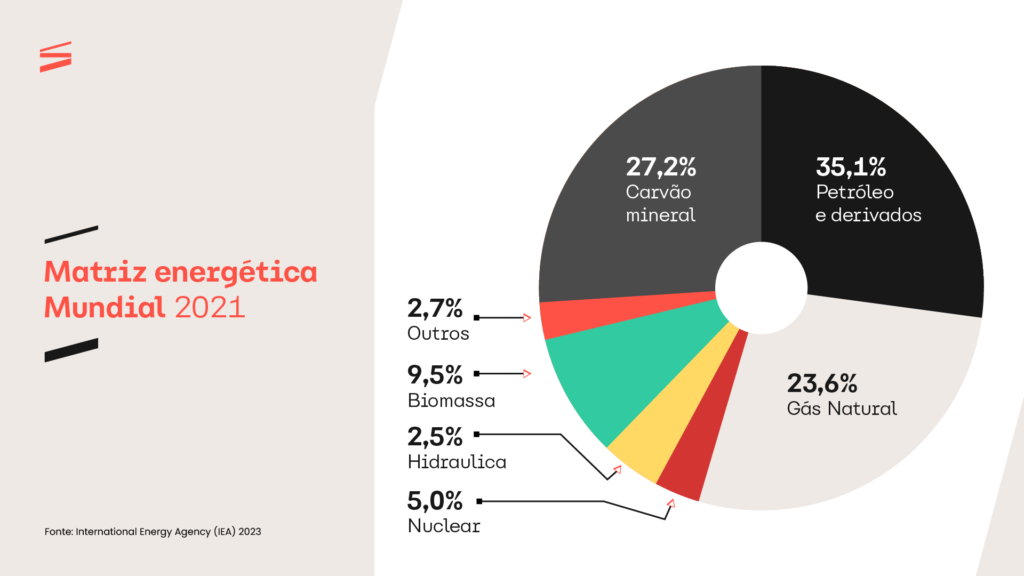
Unlike Brazil, the rest of the world does not have an energy matrix with a high presence of renewable energy sources. Coal, oil, and natural gas combined account for more than half of all energy used worldwide.
Who consumes the most energy in Brazil?
When the question is "where does the energy go", the largest consumers help explain why the energy matrix is different from the electricity matrix.
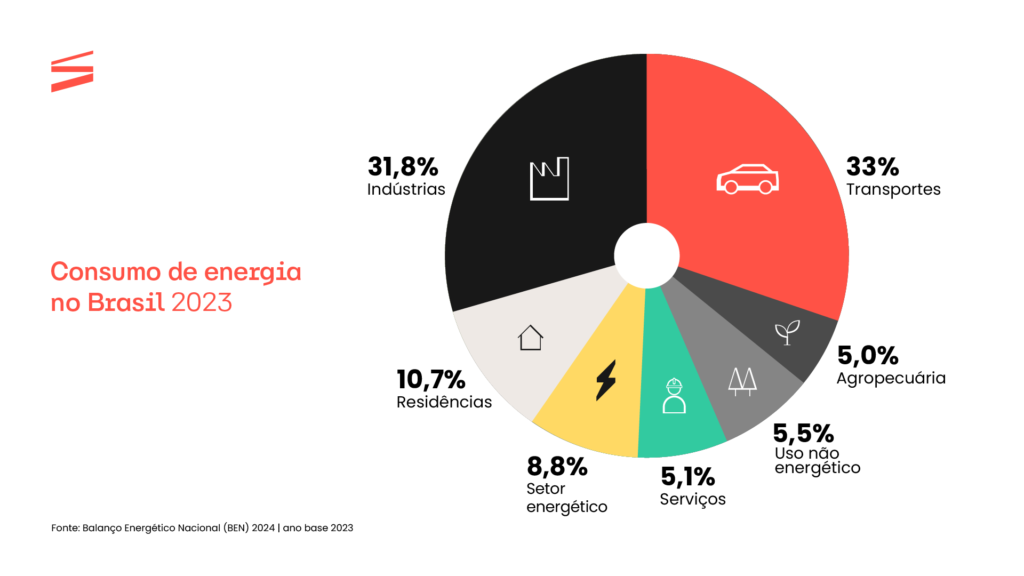
In the most recent BEN, transportation (33.2%) and industries (31.7%) lead final energy consumption, together accounting for about two-thirds of the total.
Transportation: it is the most challenging sector to decarbonize rapidly because it relies heavily on liquid fuels and already established logistics.
Industries: in many cases, electrification and energy efficiency advance faster, but thermal processes still require specific solutions.
A data point that reinforces this difference is renewability by sector: in the most recent picture, industry appears with 64.4% renewability, while transportation stands at 25.7%.
Use of renewable sources: prospects for the future
The strongest trends for the coming years involve three movements: expanding renewables, increasing system flexibility (to deal with variability), and modernizing consumption/procurement, especially in the corporate environment.
In practice, this usually involves:
Expansion of solar and wind, maintaining mix diversification (including hydro as support);
More management and predictability in consumption, with energy purchasing models that reduce volatility and bring economic efficiency;
Digitization of the sector and integration of technologies to better operate grids and assets (a theme that gains relevance as the system becomes more complex).
How to use the energy matrix to benefit your business?
The Brazilian energy matrix reflects a country in transformation. With a 50% renewable share and a diversified portfolio of sources, Brazil is in a privileged position to lead the global energy transition. For companies, understanding this composition is fundamental to making strategic decisions about consumption, procurement, and sustainability.
The evolution of the sector opens concrete opportunities to reduce costs, access clean energy, and strengthen ESG strategies. Want to understand how clean energy can help reduce costs in your case? Get to know Serena and simulate your savings on your energy bill.

Redação Serena Energia
We are part of Serena, one of the country's leading generators and traders of clean energy, with 15 years of experience connecting people and businesses to sustainable and competitive solutions. Here on the blog, you'll find content on the electricity sector, Free Energy Market, sustainability, and energy transition, with clear explanations to support decisions in your daily life, whether at home or in your business.
Editor
Leave a comment
Your email address will not be published. Required fields are marked with *