
Distributed Generation: understand what it is, modalities and advantages
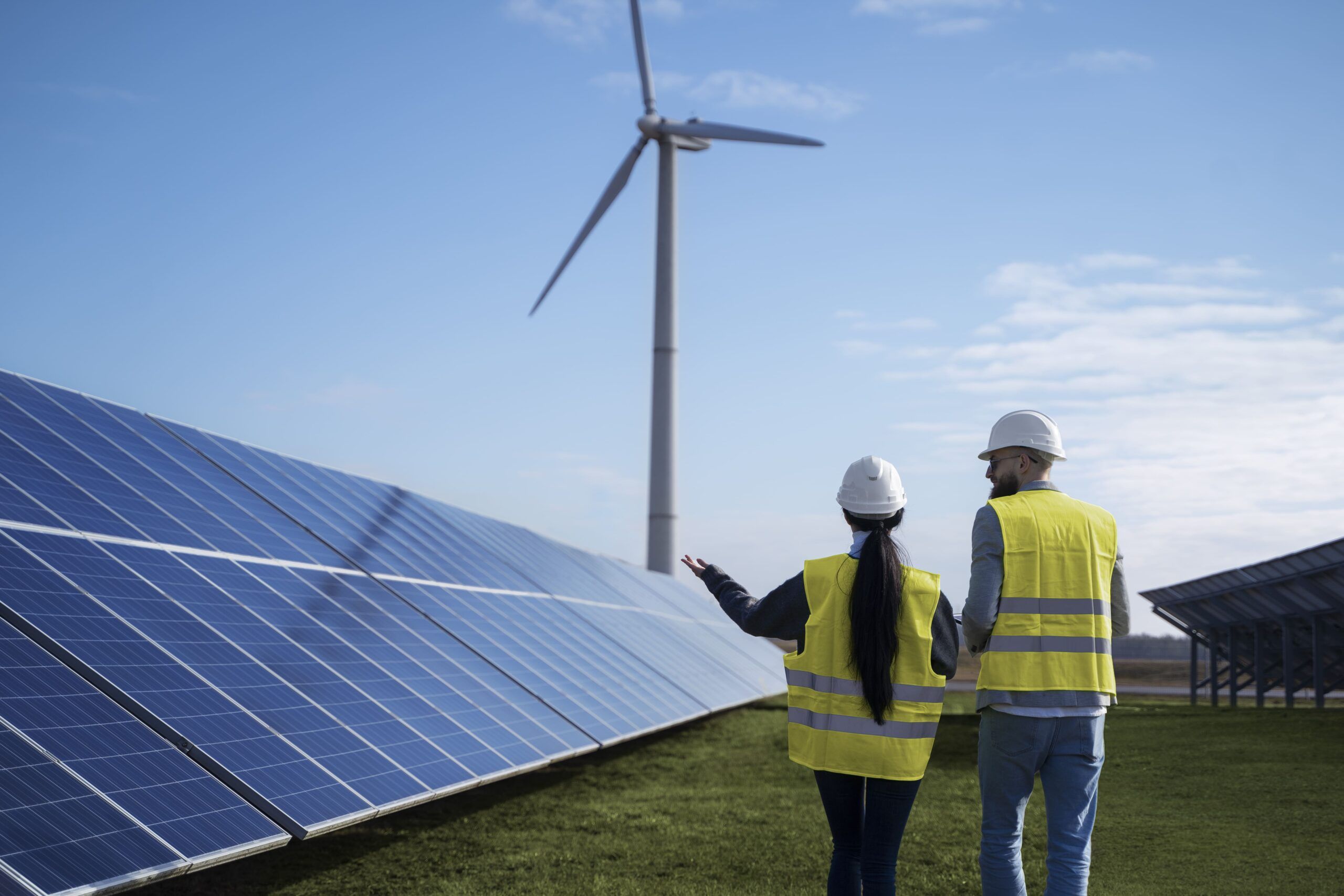
Have you ever heard of distributed generation and wondered if it's worth it for your home or business? This is a way to use renewable energy to pay less on your electricity bill, without depending solely on the local utility's tariff.
In this guide, you will understand what distributed generation is, how it works in practice, what the main modalities are, and how Serena can help you save money with clean energy.
What is distributed generation?
Distributed generation (DG) is the energy produced by microgeneration and minigeneration systems connected to the distribution grid, installed at the consumer unit or close to it. In other words, it is when the customer becomes both a consumer and a generator, with appropriate metering to record both what they consume and what they inject into the grid, and thus offset energy on their bill.
Unlike large power plants located far from cities, distributed generation happens close to those who will consume the energy. The most widely used sources are solar, wind, biomass, and small hydroelectric power plants (known in Portuguese as PCHs and CGHs). In Brazil, photovoltaic solar is the most common because it is accessible and can be installed on roofs and land.
When your generation produces more energy than you consume at that moment, the excess turns into credits on your bill to use later.
How does energy compensation work?
The Electric Energy Compensation System works like an "energy bank." When your power plant (or the shared power plant you participate in) generates more energy than you are using, this excess goes to the utility's grid and turns into kWh credits on your bill.
When you need it, such as at night or on cloudy days, these credits are used to offset the consumption recorded on the meter. The process is straightforward: you generate, accumulate credits, and use them when needed.
It is important to know that credits are valid for 60 months (5 years). Therefore, it is important to carefully plan the generation size so as not to accumulate excess credits that might expire. You can also direct these credits to other bills in your name, as long as they are with the same utility.
Even if your credits cover all your consumption, you still pay a minimum fee on your electricity bill: the availability cost (for residences and small businesses) or the contracted demand (for larger companies).
Modalities of Distributed Generation
Learn about the main modalities and understand how each one can facilitate your adoption, without the need for construction work or direct installation at the unit.
Local self-consumption
This is the modality where the power plant is located alongside the load, at the consumer unit itself (for example, on the roof of a house, business, or industry). In this case, the compensation of the excess occurs on the same bill of that unit, following the definitions of the SCEE.
It is recommended when there is available area and a consumption profile suited to local generation, such as residential rooftops, businesses, and industries with compatible space and demand. Although it is a very common modality, local self-consumption usually requires initial investment and an installation phase. Therefore, it is not always the best choice for those who want to save money without construction work or placing equipment on their property.
Remote self-consumption
Remote self-consumption allows you to use credits from a power plant in other units under the same ownership, as long as all of them are within the same concession area of the utility. This makes it possible to maximize the use of energy credits and concentrate generation at a more favorable point.
This modality is useful for those who do not have space to install the power plant at their main address or want to offset headquarters and branches with a single remote power plant sized for the combined loads.
Developments with multiple consumer units
This modality covers condominiums and developments with common areas, allowing the generation of the condominium unit or the development's power plant to be allocated among the various participating units, according to criteria defined in the registration with the utility.
Shared generation
In shared generation, consumers organize themselves through a consortium, cooperative, or other civil associations to distribute a power plant's credits among the participants served by the same energy distribution company, within the same concession area.
There is no need to have a roof, land, or do construction work. Just sign up for a plan, and the credits arrive directly on your bill every month. For those looking for practicality, this modality is usually a great entry point into Distributed Generation — and it is in this model that Serena offers a simple experience to start saving with renewable energy.
Who can join the Distributed Generation system?
Any person or company that receives an electricity bill from the local utility can participate in distributed generation. These are called captive consumers, and they include residences, businesses, industries, rural properties, and even public agencies.
The exception is consumers who have already migrated to the Free Energy Market, which have different contracting rules and do not participate in the traditional compensation system.
How much can you save?
Savings on your electricity bill depend on several factors: how much you consume, your region's tariff, the type of system chosen, and the amount of energy you manage to generate.
The compensation primarily reduces the portion of energy you consume (measured in kWh). Other components of the tariff, such as the use of the distribution grid, continue to be charged according to the rules of Law 14,300.
Learn more about how Distributed Generation helps reduce energy costs
DG and the Free Energy Market: which is the best alternative for you?
Distributed generation is an alternative for those who want to reduce their bill through energy credits. Depending on the model, it is also a way to have renewable energy with greater simplicity, including without construction work at the consumer unit.
The Free Market, on the other hand, is an environment where companies buy energy directly from generators or traders, with prices negotiated and registered with the CCEE (Electric Energy Commercialization Chamber).
Thinking about migrating to Distributed Generation? Serena helps you!
Whether for your home, business, or company, switching to distributed generation is a strategic decision that brings savings, predictability, and sustainability. And you don't need to deal with installation, maintenance, or bureaucracy to enjoy these benefits.
With Serena's distributed and shared generation solutions, any consumer can receive energy credits directly on their bill, in a practical and secure way. You reduce costs, strengthen your environmental commitment, and still count on the support of smart energy experts to choose the best path for your reality.
Want to know how much you can save and how to join distributed generation without complications? Get a discount simulation and discover the best strategies to transform energy into results!

Redação Serena Energia
We are part of Serena, one of the country's leading generators and traders of clean energy, with 15 years of experience connecting people and businesses to sustainable and competitive solutions. Here on the blog, you'll find content on the electricity sector, Free Energy Market, sustainability, and energy transition, with clear explanations to support decisions in your daily life, whether at home or in your business.
Editor
Leave a comment
Your email address will not be published. Required fields are marked with *