
How does remote generation work under the same ownership
Written by: André Lima, Growth, Serena Energia
Main lessons from this article
-
Group A companies can reduce costs across multiple units by generating renewable energy at a single location and transferring credits to other units under the same CNPJ, provided all are in the same concession area.
-
The prerequisites include 12 months of invoices, proof of common ownership, approval by the distributor, and proper sizing to cover the aggregated consumption of the units.
-
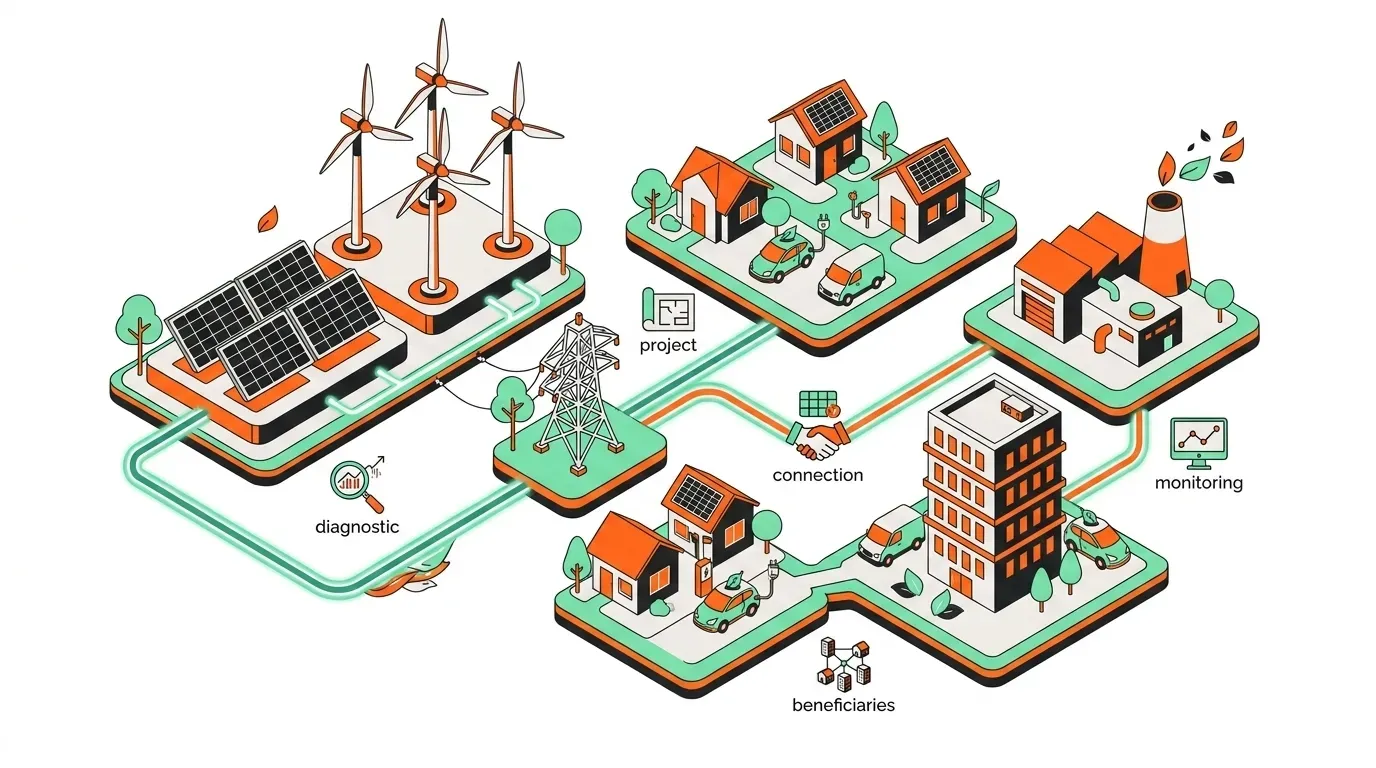
The process follows five main steps: consumption diagnosis, technical design, approval, registration of beneficiary units, and monthly credit monitoring.
-
Common errors such as insufficient planning, system undersizing, and lack of documentation can be avoided with multidisciplinary involvement from the start.
-
For companies with units in different regions, the free energy market is a more flexible alternative. To assess the best solution, visit Serena Energia and speak with a consultant.
Prerequisites for remote generation under the same ownership
A remote generation project under the same ownership requires prior confirmation of technical, documentary, and organizational feasibility. The finance, facilities, and legal areas participate from the start, each with specific responsibilities.
To confirm technical and documentary feasibility, the company needs to gather two sets of information: documentation proving ownership and consumption history, and technical conditions that determine whether credit transfer is possible.
The documents and information typically required include:
-
Recent invoices from all consumer units, with a minimum of 12 months
-
Monthly consumption data in kWh and contracted demand per unit
-
CNPJ of the units and proof of common ownership
-
Plan or address of the location where the generation system will be installed
-
Articles of incorporation or legal documentation proving the link between the units
The technical and operational conditions that impact the project's feasibility are:
-
All units must be in the concession area of the same distributor, as credits cannot be transferred between regions served by different distributors, even if the units belong to the same CNPJ
-
The generation system must be approved by the distributor and equipped with a bidirectional meter
-
The installed capacity must be sized to cover the aggregated consumption of the beneficiary units, as undersized systems do not generate enough credits for meaningful compensation
-
Systems filed after January 7, 2023 are subject to progressive B‑Line charges on compensated energy, reaching up to 60% in 2026 according to Law 14.300/2022, which affects the project's net savings calculation
Overview of the process in 5 macro steps
The remote generation process under the same ownership follows five sequential phases. Each phase has a clear objective and depends on the completion of the previous one to move forward.

-
Diagnosis and eligibility: mapping the consumption profile of all units and confirming they are in the same concession area
-
Technical design and sizing: development of the generation project with capacity appropriate to the aggregated consumption
-
Connection request and approval: protocol with the distributor, system installation, and technical inspection
-
Registration of beneficiary units: formal registration of consumer units that will receive the credits with the distributor
-
Monitoring and verification: monthly monitoring of invoices to confirm the correct application of credits
The total duration of the process varies according to the distributor and the project's complexity. The distributor's analysis and approval timeline is usually the main factor extending the schedule. The following sections detail each of these five steps, with objectives, responsible parties, and specific risks.
Assess with our specialists whether remote generation or the free energy market is the best route for your Group A.
Step-by-step guide
Step 1: consumption diagnosis and eligibility confirmation
Objective: map the consumption of all units and confirm that basic requirements are met.
The internal responsible is usually the facilities manager or the controller, with legal support to validate ownership. Actions include collecting 12 months of invoices from each unit, identifying the distributor responsible for each address, and confirming that all operate under the same CNPJ.
Risk: units served by different distributors make credit transfer between them unfeasible. This point must be verified before any investment in technical design.
Step 2: sizing and technical design preparation
Objective: define the generation system capacity needed to cover the aggregated consumption of the beneficiary units.
Sizing must consider the historical consumption of all units, seasonality, and expansion plans. When installed capacity is insufficient, credit compensation is partial and the financial result falls short of expectations. The technical design must be prepared by a qualified professional and follow the local distributor's specifications.

Dependency: the technical design is the base document for the connection request. Errors in this step delay all subsequent phases.
Step 3: connection request and approval with the distributor
Objective: obtain formal authorization from the distributor to operate the remote generation system.
The approval process follows three sequential steps. The company files the connection request, requests a technical inspection after installation, and replaces the existing meter with a bidirectional meter. Any adjustment identified in the inspection must be corrected before final authorization.
Attention point: unauthorized changes to the system after approval can compromise the project's tariff regime. Therefore, any future modification must follow the formal procedure with the distributor.
Understand when the free market offers more predictability by talking to our consultants specialized in Group A.
Step 4: registration of beneficiary units
Objective: formally register with the distributor which consumer units will receive the generated credits.
The company must submit the list of participating units with the connection request, identifying each consumer unit and the proportion of credits to be allocated. The internal responsible is usually the legal department, which confirms the ownership of each unit and the documentation required by the distributor.
Checklist for this step:
-
CNPJ and installation number of each beneficiary unit
-
Percentage of credits to be allocated per unit
-
Documentation proving common ownership
-
Confirmation that all units are in the same concession area
Step 5: monitoring and verification of credits
Objective: confirm that credits are being correctly applied to the invoices of each beneficiary unit.
After operation begins, each unit's invoices must be analyzed monthly to verify that credits appear correctly. Credits are valid for 60 months from the billing date. Credits not used within this period are lost without compensation. Therefore, active monitoring is essential to avoid waste.
Common mistakes and solutions
The most frequent problems in remote generation projects under the same ownership concentrate in several recurring categories.
Insufficient planning: starting the project without confirming that all units are in the same concession area is the most common and costly mistake, because investments in technical design and equipment become unrecoverable when credit transfer is not allowed. Therefore, the solution is to conduct the eligibility diagnosis before any financial commitment.
System undersizing: when installed capacity is insufficient to cover the aggregated consumption of the units, compensation is partial and the financial result falls short of expectations. To avoid this scenario, sizing must consider the full historical consumption and growth projections that ensure sufficient capacity throughout the system's useful life.
Incomplete documentation: the lack of documents proving common ownership of the units is one of the main causes of approval delays. The legal department needs to participate from the start to prepare all necessary documentation.
Lack of alignment between areas: projects led only by facilities, without participation of finance and legal, often generate rework. The recommendation is to form a multidisciplinary working group from the diagnosis stage.
Not monitoring credit expiration: credits not used within 60 months are lost. Companies with seasonal consumption should adjust credit allocation among units to avoid waste.
Result verification
Confirmation that the project is functioning correctly depends on objective evidence in the invoices and periodically monitored indicators.
The recommended financial indicators are:
-
Value of credits applied per unit each month
-
Effective reduction in each beneficiary unit's bill compared to the previous period
Balance of accumulated credits and expiration date
The operational indicators include:
-
Monthly system generation in kWh relative to the aggregated consumption of the units
-
Utilization rate of generated credits, measured by credits applied over credits generated
-
Occurrences of adjustments or inconsistencies in the distributor’s invoices
The review should be monthly during the first six months of operation and quarterly after the system stabilizes. Remote monitoring tools for the generation system allow identifying performance drops before they affect the available credits.
Talk to Serena Energia to assess whether the free energy market offers more suitable predictability and savings for your Group A profile.
Advanced options and next steps
Companies with multiple units in regions served by different distributors cannot meet the entire need solely with remote generation under the same ownership, because credit transfer is limited to the concession area of a single distributor. In these cases, the free energy market tends to be the most efficient alternative, as it allows contracting energy at a pre‑agreed price for all Group A units across Brazil, regardless of the local distributor.

In the free energy market, the local distributor remains responsible for the physical delivery of electricity. The difference is that the company begins to negotiate price, term, and energy source directly with a retailer such as Serena Energia, reducing exposure to tariff flags and annual adjustments of the regulated market.
For companies with sustainability goals, the free energy market also allows contracting 100% renewable energy with the issuance of Renewable Energy Certificates (I‑RECs), which auditable prove the clean origin of the consumed energy, a relevant asset for ESG reporting and public decarbonization commitments.
Related topics for deeper exploration include managed migration to the free energy market, management of multiple consumer units in Group A, and renewable energy certification for sustainability reporting.
Frequently asked questions
Which companies can use remote generation under the same ownership?
Any company that has two or more consumer units registered under the same CNPJ and served by the same distributor can adopt the model. There is no restriction by size or sector. Retail chains, industries with multiple plants, and companies with headquarters and branches in the same region are common examples.
What happens if the units are in regions served by different distributors?
In this case, credit transfer between the units is not allowed under the remote generation model with the same ownership. Each unit would need an independent project within its own concession area. For companies with units in multiple regions, the free energy market is usually the most practical alternative, as it allows contracting energy for all Group A units across Brazil with a single contract.
How long are energy credits available?
Generated credits are valid for 60 months from the billing date. Credits not used within this period are lost without compensation. Therefore, monthly monitoring of the balance and expiration date is essential, especially for companies with seasonal consumption.
Are remote generation and the free energy market mutually exclusive?
These two strategies can be complementary. Some companies use remote generation for eligible units within the same concession area and migrate other units to the free energy market. The choice depends on consumption profile, geographic distribution of units, and the company’s financial and sustainability objectives. A specialized consultant can help define the most efficient combination.
What are the main costs involved in a remote generation project?
Costs include the technical design, generation equipment, installation, the bidirectional meter, and any adjustments identified during the distributor’s inspection. In addition, systems filed after January 7 2023 are subject to the progressive “Fio B” charges mentioned earlier, which must be considered in the net savings calculation of the project. These charges increase gradually in the coming years, making it relevant to compare this model with the conditions available in the free energy market before deciding.
Conclusion
Remote energy generation under the same ownership is a concrete alternative for Group A companies served at medium and high voltage, seeking to reduce costs across multiple units without installing generation systems at each address. The model works when all units are within the concession area of the same distributor and share the same CNPJ.
The process requires multidisciplinary planning, proper documentation, and continuous monitoring so that credits are applied correctly and do not expire unused. For companies with units distributed across different regions of Brazil, the free energy market offers a direct route to cost predictability, with pre‑agreed price contracts and the possibility of 100% certified renewable energy.
Serena Energia, one of the largest wind and solar power generators created in the Americas, offers managed migration to the free energy market at no additional cost to the client, handling the entire process with the distributor and the CCEE (Electric Energy Commercialization Chamber). With more than 17 years of history and clients such as Heineken, Cargill, and Bayer, Serena Energia has the structure to serve Group A companies seeking savings, predictability, and sustainability.
Discover the best solution for your units by talking to our specialized consultants.

André Lima
We are part of Serena, one of the country's leading generators and traders of clean energy, with 15 years of experience connecting people and businesses to sustainable and competitive solutions. Here on the blog, you'll find content on the electricity sector, Free Energy Market, sustainability, and energy transition, with clear explanations to support decisions in your daily life, whether at home or in your business.
Editor
Leave a comment
Your email address will not be published. Required fields are marked with *