
What is ANEEL? What are its functions in the electricity sector?
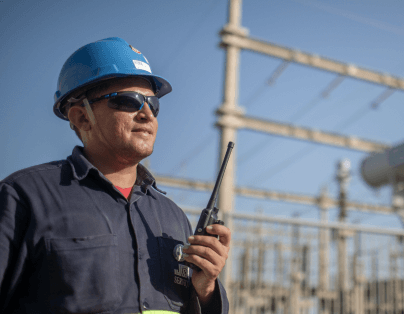
Have you ever noticed how essential electricity is to our lives? We use electricity for countless activities, from routine ones integrated into our daily lives to more complex ones related to the functioning of the economy and essential services for society.
And for all this to happen in a sustainable way, we rely on certain agents that support the sector. One of these agents is ANEEL. If you want to better understand what ANEEL is and discover how it works, stay right here, and we will explain it to you!
What is ANEEL?
ANEEL, the Brazilian National Electric Energy Agency, is a federal autarchy linked to the Ministry of Mines and Energy, created in 1996 to regulate the Brazilian electricity sector.
In other words, it is a public administration organization with autonomy to make decisions and self-manage, with the mission of providing favorable conditions for the electric energy market to develop in a continuous and balanced way, always seeking a balance between sector agents and the protection of society.
The role and responsibilities of ANEEL
ANEEL's performance is essential to guarantee the balance, trust, and evolution of the Brazilian electricity sector, both from the perspective of companies and final consumers. The goal is for energy to be generated, transmitted, and distributed continuously, with quality, safety, and affordable rates.
The agency's role unfolds into technical, economic, environmental, and social areas, always focusing on the public interest and alignment with best global regulatory practices.
In practice, this role materializes in some of ANEEL's central responsibilities, such as:
Regulating and inspecting the production, transmission, distribution, and commercialization of electric energy;
Acting as a mediator between energy sector agents and consumers, resolving conflicts and promoting dialogue;
Permitting and authorizing operations of companies, facilities, and services in the sector, analyzing technical capacity, sustainability, and innovation;
Issuing detailed norms and resolutions that complement federal legislation and keep up with market demands, ensuring continuous updating of the regulatory framework.
These responsibilities have expanded over time to encompass new needs, such as the inclusion of energy efficiency, the promotion of renewable sources, and the expansion of the Free Energy Market.
Regulation
ANEEL establishes technical and commercial standards for the operation of the entire electric energy chain, encompassing generation, transmission, distribution, and commercialization. This regulation is fundamental to ensuring that all stages of the sector operate with a high level of quality and safety, bringing benefits to both companies and final consumers.
Regulatory action involves sector agents, including captive consumers and free consumers, independent producers, and autoproducers. ANEEL also analyzes the specific needs of each region of Brazil, promoting the efficient use of energy, preventing waste, and encouraging technological innovation.
In the field of regulation, the agency evaluates new projects and procedures to ensure they are aligned with national and international standards, including environmental and social requirements. By regulating research and energy efficiency projects, ANEEL stimulates sustainable development, fosters renewable sources, and facilitates the adoption of smart solutions in generation and consumption.
There are three types of regulation at ANEEL:
Technical and commercial regulation of service standards (focused on generation, transmission, distribution, and commercialization);
Economic regulation (directed at tariffs and the market);
Regulation of sector research and development projects and energy efficiency.
Inspection
In addition to regulating the network's operation, ANEEL exercises strict inspection over public and private services in the sector, analyzing procedures, indicators, contractual obligations, and the adequacy of investments made.
Inspection work involves field inspections, financial audits, remote monitoring, and performance indicator analysis — such as continuity, frequency of interruptions, and quality of customer service. Learn how energy sector contracts work.
Companies that disregard the rules may be warned, fined, or even have their concessions revoked in cases of serious or repeat infractions. This rigor is indispensable to prevent abuses and ensure that all companies provide services within the required standards.
ANEEL's inspection contributes to the constant improvement of the sector, increases transparency for society, and reduces risks of inefficiency or mismanagement in critical operations.
Auctions
Holding energy auctions in the Regulated Contracting Environment (ACR) is one of ANEEL's most discussed functions with the highest economic impact.
In these auctions, distributors acquire energy from generators and traders. The processes are carried out with wide transparency, promoting competition both among established suppliers and new entrants, including agents that prioritize clean and renewable energy.
Auctions can be aimed at:
New projects, encouraging the construction of new power plants and technological modernization;
Existing power plants, optimizing installed capacity;
Reserve energy, important to guarantee supply stability during times of high demand or water crises.
The choice of winners is always based on the lowest viable price offer. Thus, millions of consumers benefit by having access to energy at more affordable prices, and the entire system wins, becoming more robust, innovative, and prepared for future challenges.
Beyond the financial aspect, the auctions organized by ANEEL help Brazil meet international sustainability goals, promoting projects that reduce emissions and expanding the share of sources such as wind energy, solar, and biomass.
Tariff Definitions
If you are part of the Regulated Contracting Environment (ACR) and receive a monthly electricity bill, it is worth knowing that ANEEL audits and approves the calculations made by energy distributors for passing on tariffs.
The calculation is based on certain variables, such as the maintenance of the infrastructure for the service to continue, and the creation of incentives to generate increasingly more efficiency.
From there, the agency creates methodologies for calculating tariffs for the electricity sector (aimed at generation, transmission, distribution, and commercialization), taking into account factors such as generation infrastructure, transmission, distribution, and charges.
Definitions of Rights
The rights and duties of energy suppliers and consumers, defined by ANEEL, are available in an official document for consultation. This is Normative Resolution No. 414/2010.
The set of guidelines is the result of a construction process that has been taking place since 1957. The goal is to define and register all the rights and duties of consumers and companies responsible for providing the public electric energy distribution service.
Among the subjects covered in the resolution are:
Tariff modalities, with different options for varied consumption profiles;
Transparent, well-detailed contracts and clear rules for service provision;
Correct measurement of consumption, regular equipment reading, and fair billing;
Rules for payments, collection of defaults, and authorized installments;
Responsibilities of both distributors and consumers;
Public service procedures, channels for clarifying doubts, and formal registration of complaints;
Compensation for damages in cases of failures, equipment damage, or prolonged interruptions.
This regulatory framework offers legal security for companies in the sector and ensures that the consumer is protected and supported in all situations involving energy supply.
ANEEL and the Free Energy Market
Just as it regulates the ACR, ANEEL also inspects contracts, generation, and transmission in the Free Contracting Environment (ACL). In this format, bilateral contracts allow direct negotiation between producers, traders, and large consumers, broadening the freedom of choice, increasing competitiveness, and promoting operational efficiency.
The agency defines requirements for migration to the free market, inspects operations via the Electric Energy Commercialization Chamber (CCEE), and implements actions to gradually expand access for new consumers — including those with a demand of less than 500 kW, aligning Brazil with the international trend of democratizing energy supply.
This advancement in regulation and the opening of the free market reflects the constant pursuit of modernizing the Brazilian electricity sector. By encouraging new business models, expanding freedom of choice, and promoting low-carbon technologies, ANEEL strengthens a more competitive, efficient environment aligned with the needs of the country's energy future.
Understanding ANEEL's role in detail makes you, as a consumer or sector agent, more prepared to make strategic decisions, negotiate better conditions, and act with transparency and security in all commercial energy relationships.
Knowledge about rights, obligations, tariffs, possibilities for migration to the free market, and regulatory instruments always puts you one step ahead in efficiency, savings, and leadership in sector trends.
Want to learn even more about how to save on your electricity bill or explore opportunities in the free energy market? Access the free Serena Energia simulator, discover possibilities for your profile, and transform energy into prosperity!
See also:

Redação Serena Energia
We are part of Serena, one of the country's leading generators and traders of clean energy, with 15 years of experience connecting people and businesses to sustainable and competitive solutions. Here on the blog, you'll find content on the electricity sector, Free Energy Market, sustainability, and energy transition, with clear explanations to support decisions in your daily life, whether at home or in your business.
Editor
Leave a comment
Your email address will not be published. Required fields are marked with *