
What is ESG? Environmental + Social + Corporate Governance!
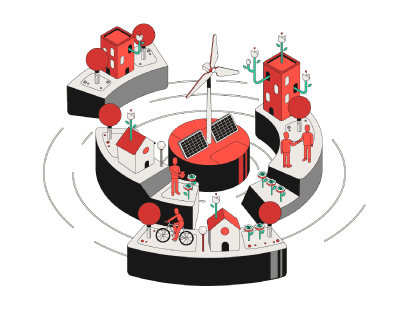
ESG (Environmental, Social and Corporate Governance) is a set of best practices that organizations should implement, aiming not only to prove their solidity and ensure sustainable growth, but also to highlight their concern for the environment and social well-being.
The topic might seem complicated, but it is not! To help you, we have prepared this complete guide to help you understand what ESG is, how it has evolved in recent years, and why its adoption has become indispensable for business survival. Check it out!
What is ESG?
To understand what ESG is, you don't need to be a financial market expert, as these principles serve companies, investors, and consumers alike. It is a new perspective on sustainability, acting almost like a filter when making investment decisions. The movement is revolutionizing the business world, with an emphasis on the growing search for companies that work toward a better future for everyone.
Unlike traditional sustainability, which is often limited to isolated actions, ESG requires a structural and measurable commitment on three distinct fronts. The methodology allows investors to assess risks and opportunities more accurately, considering not only financial results but also long-term impacts.
How did ESG originate?
ESG emerged in 2004 with the "Who Cares Wins" report, an initiative by the UN Global Compact to integrate environmental, social, and governance factors into investment decisions in the financial market.
The agenda was born from a call by then-Secretary-General Kofi Annan to CEOs of major financial institutions to bring these topics to the center of the capital market.
In 2006, the launch of the Principles for Responsible Investment (PRI) consolidated practical guidelines and accelerated adoption by institutional investors. Since then, ESG has established itself as a lens to evaluate risk, return, and long-term impact in companies, becoming part of global corporate strategy and governance.
What are the three pillars of ESG?
The ESG concept is built upon three interdependent pillars that guide companies toward more ethical, responsible, and sustainable management:
Environmental
The first letter of the ESG acronym represents Environmental. These are environmental metrics that help demonstrate the level of organizational commitment to minimizing impacts on the environment and making proper compensations. For example, industries can choose to use solar energy.
In 2025, the focus on decarbonization and net-zero commitments became a major competitive advantage. Companies that demonstrate progress in the circular economy are also gaining prominence in the market.
Social
The second letter of the ESG acronym corresponds to the social scope, which represents the commitment to caring for the people who make up the stakeholder groups, without forgetting employees and the surrounding community. As an example, we can mention the business coalition for racial and gender equity, which aims to promote diversity and racial and gender equality in the workplace.
DEI (Diversity, Equity, and Inclusion) policies became an important criterion for financing and corporate reputation in 2025. Younger generations prioritize the sustainable agenda, and many professionals are willing to accept lower salaries to work with sustainability.
Governance
The last letter of the ESG acronym is related to corporate governance, which involves risk management and compliance to prevent occurrences of fraud and corruption. These can harm investments and organizational reputations. To this end, experts recommend practices for preventing corporate fraud, including protection against data theft, forged checks and documents, cloned cards, and favoritism.
Transparency with shareholders and various stakeholder groups has become mandatory for publicly traded companies. The focus is to ensure the fulfillment of commitments to investors, employees, suppliers, and other stakeholders.
ESG Company: what is it?
The definition of "what ESG is" can vary depending on each company's characteristics, because having a sustainable product is not strictly required. On the other hand, it is possible to adopt sustainable practices, starting with simple attitudes.
Furthermore, it is important to take into account relationships with stakeholders, governance policies, and the adoption of measures to minimize problems society is facing.
Advantages of ESG investments for companies
Companies that adopt ESG practices achieve tangible and strategic benefits:
1. Greater long-term competitiveness
Given the consumer trend of "excluding" "socially irresponsible" organizations. According to Nielsen research conducted in 2019, 42% of surveyed individuals are changing their consumption habits to reduce their environmental impact. The same study points out that 65% do not buy from companies associated with slave labor.
2. Investment considered socially positive
That is, beneficial to society as a whole, which also adds value to the corporate image. In other words, conscious consumers tend to choose brands with purposes they genuinely identify with.
3. Solid foundations for allocating resources well
Following strategic planning and corporate transparency policy. In this case, the focus is to ensure the fulfillment of commitments to different stakeholders (investors, shareholders, employees, suppliers, and others).
ESG in practice: why did the topic take center stage in 2025?
With the new regulatory requirements implemented this year, the ESG concept has gained even more momentum—especially among Brazilian companies. In 2025, according to Forbes Brasil, companies that fail to adopt ESG practices run real risks of losing value on the Stock Exchange, facing difficulties in international negotiations, and even losing access to financing.
This transformation is not just a trend: it is a consolidated reality in the global and Brazilian scenario. Recent data show that 54% of large Brazilian companies already have a structured ESG strategy, and this number tends to grow even further under pressure from consumers, investors, and the new regulatory framework from CVM and B3.
What changed in ESG in 2025?
Regulatory and market changes brought significant transformations:
Stricter regulation
New requirement for ESG reports following the "comply or explain" model for publicly traded companies and suppliers in large supply chains, as established by CVM and B3.
Transparency and auditing
Reports based on international standards such as GRI or IFRS S1/S2 are now mandatory to ensure the comparability and credibility of information.
Focus on decarbonization
Programs that demonstrate net-zero targets and progress in the circular economy have become major competitive advantages for companies seeking investments.
Diversity and inclusion
DEI (Diversity, Equity, and Inclusion) policies are important criteria for financing, reputation, and compliance with new regulatory requirements.
Technology
Monitoring using big data, artificial intelligence, and blockchain brings more credibility to ESG metrics.
Fundraising
Companies aligned with ESG have access to international funds and lower financing rates, making the ESG agenda a real competitive differentiator.
Combating greenwashing
Pressure for auditable reports and harsher penalties for those who simulate good ESG performance has increased significantly.
What are ESG funds?
ESG funds are investment funds that consider the environmental, social, and corporate governance criteria of the companies in which investments are made. The difference compared to other types of investments is that an ESG fund offers specialized professional management focused on selecting assets that respect sustainable practices.
Currently, the Brazilian market has 193 active ESG funds, which can be fixed income, equities, or multi-market. These funds function like an investment club, where multiple shareholders have their resources applied collectively under the coordination of a specialized manager. The manager directs the fund's money according to a predefined strategy, prioritizing companies with good ESG performance.
Examples of ESG companies in Brazil
The concept of ESG in relation to sustainability is consolidated in numerous countries. In Brazil, many institutions are betting on this movement, as these principles generate engagement and provide relevant arguments to increase the interest of potential investors.
Santander
In terms of governance, processes, policies, and conduct are based on transparency and shareholder rights, since shares are traded on the BM&FBovespa and NYSE stock exchanges. Operations are subject to national and international auditing and security mechanisms, such as the Sarbanes-Oxley Act.
Natura
The company's challenge is to generate positive impacts through its activities, which includes offsetting carbon emissions by planting trees and recovering water springs. Natura also researches new uses for materials that would otherwise be discarded and develops other projects aligned with the circular economy.
Itaú
In its Integrated Annual Report, the bank features a section dedicated to ESG topics. Among this additional information are business indicators and ongoing practices, including financing in positive impact sectors, financial citizenship, and responsible management.
ESG Brazil Index
B3 has six sustainability indices. The Stock Exchange argues that, "in addition to serving as attractive instruments for investors committed to this theme, they help stimulate companies to incorporate environmental, social, and governance issues into their daily operations." Check out what these indices are:
Corporate Sustainability Index (ISE): Evaluates sustainability practices of listed companies;
Efficient Carbon Index (ICO2): Measures carbon emission efficiency;
Index of Shares with Differentiated Corporate Governance (IGC): Highlights companies with good governance practices;
Corporate Governance Trade Index (IGCT): Focused on companies with a high level of governance;
Corporate Governance Index – Novo Mercado (IGC-NM): Exclusive to companies in the Novo Mercado segment;
Index of Shares with Differentiated Tag Along (ITAG): Protects minority shareholder rights.
These indicators allow investors to evaluate company performance across different aspects of the ESG agenda.
We hope this post has helped clarify what ESG is. If you also want to learn about the energy market, continue following the Serena Talks blog and stay up to date with content focused on sustainability, management, and energy.
See also:
References
O que é o conceito ESG e por que ele atrai investidores? Available at: <https://epocanegocios.globo.com/Sustentabilidade/noticia/2020/08/o-que-e-o-conceito-esg-e-por-que-ele-atrai-investidores.html>. Accessed on: Oct 27, 2025.
BERNARDO, J. V. Especial ESG É Destaque da Nova Edição da Forbes Brasil. Available at: <https://forbes.com.br/escolhas-do-editor/2025/05/especial-esg-e-destaque-da-nova-edicao-da-forbes-brasil/>. Accessed on: Oct 27, 2025.
CONSOLI, P. ESG cresce no Brasil e 54% das grandes empresas já tem estratégias de sustentabilidade estruturadas. Available at: <https://exame.com/esg/esg-cresce-no-brasil-e-54-das-grandes-empresas-ja-tem-uma-estrategia-estruturada/>.
RUGANI, G. Novas regras da CVM e B3 com enfoque em práticas de ESG entram em vigor em 2025 e 2026. Available at: <https://capitalaberto.com.br/canais/novas-regras-da-cvm-e-b3-com-enfoque-em-praticas-de-esg-entram-em-vigor-em-2025-e-2026/>.
BRASIL, S. Brasil tem 46 empresas na lista Melhores do Mundo Sustentáveis de 2025 – Sustentabilidade Brasil. Available at: <https://sustentabilidadebrasil.com/brasil-tem-46-empresas-na-lista-melhores-do-mundo-sustentaveis-de-2025/>. Accessed on: Oct 27, 2025.
Brasileiros estão cada vez mais sustentáveis e conscientes. Available at: <https://www.nielsen.com/br/pt/insights/article/2019/brasileiros-estao-cada-vez-mais-sustentaveis-e-conscientes/>.
Índices de sustentabilidade | B3. Available at: <https://www.b3.com.br/pt_br/b3/sustentabilidade/produtos-e-servicos-esg/indices-de-sustentabilidade/>. Accessed on: Oct 27, 2025.
Tudo sobre a Lei Sarbanes-Oxley, também conhecida como SOx. Available at: <https://www.treasy.com.br/blog/sox-lei-sarbanes-oxley>. Accessed on: Oct 27, 2025.

Redação Serena Energia
We are part of Serena, one of the country's leading generators and traders of clean energy, with 15 years of experience connecting people and businesses to sustainable and competitive solutions. Here on the blog, you'll find content on the electricity sector, Free Energy Market, sustainability, and energy transition, with clear explanations to support decisions in your daily life, whether at home or in your business.
Editor
Leave a comment
Your email address will not be published. Required fields are marked with *