
Understand what ONS is and how it works
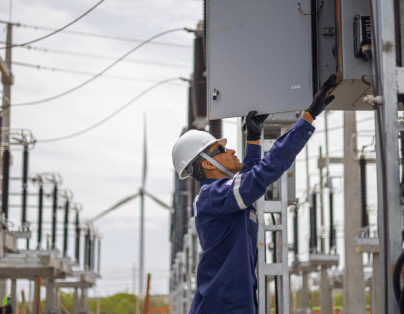
The Brazilian electric sector is one of the most sophisticated systems in the world, capable of integrating different generation sources, multiple technologies and regulatory challenges. At the center of this gear is the ONS (National Electric System Operator), responsible for coordinating the operation of generation and transmission of electric energy, ensuring continuous and safe supply for thousands of companies and millions of people.
In a scenario of growing renewable sources, advancement of the free energy market, digitization of processes and emission reduction targets, operating the electric system in an integrated and safe manner becomes increasingly complex. In this context, understanding the functioning and responsibilities of ONS is essential to grasp how Brazil ensures the balance between energy supply and demand today and in the future.
What is ONS?
The National Electric System Operator is the entity responsible for coordinating and controlling the operation of generation and transmission facilities that are part of the National Interconnected System (SIN) and some isolated systems, under regulation and supervision of ANEEL. Its role is aimed at ensuring that the system operates with safety, reliability and efficiency, guaranteeing the supply of electric energy to the country.
It is important to differentiate the role of ONS from that of the Energy Research Company (EPE). While ONS carries out the planning and scheduling of the electric system operation based on the current network situation, seeking to avoid operational risks and ensure safe supply, EPE is responsible for the long‑term planning of generation and transmission expansion, considering consumption growth, industrialization and energy security.
Created in 1998 by federal law, ONS is a non‑profit civil association, composed of electric sector agents — generators, transmitters, distributors, marketers, free consumers and governmental entities — that operate in cooperation under ANEEL regulation.
ONS develops studies and operation plans in short‑ and medium‑term horizons. It is also responsible for coordinating, in real time, the operation of generation and transmission of electric energy throughout the national territory via the SIN, a network that interconnects the main regions of Brazil and makes electricity exchange between them possible. The operation of the SIN is the responsibility of ONS.
What is ONS's role for the energy sector?
ONS must ensure that the electro‑energy system operates in an optimized manner, seeking ever lower costs, but without compromising the technical and quality standards set by the National Electric Energy Agency (Aneel).
In addition, the body is also overseen and regulated by Aneel, and together they are responsible for setting the technical specifications of transmission auctions. ONS works in an articulated manner with the CMSE (Electric Sector Monitoring Committee), which is coordinated by the MME (Ministry of Mines and Energy).
Other important tasks of ONS are: ensuring that electric sector agents (generators, self‑producers, consumers, distributors and import/export agents) access the transmission network on an equal basis.
Through five centers spread across the country, ONS controls real‑time operation. The body is responsible for ensuring the safety and continuity of energy supply, recommending the necessary expansions so that the electric grid continues to grow.
Its activity goes beyond Brazil; ONS can enter into agreements with South American countries through electric energy exchanges. It also participates in technical cooperation agreements with institutions from other countries.
Understand ONS's main areas of activity:
For the electro‑energy system to work correctly, ONS works in several areas. Some of these fronts interconnect during the process. See more:
Expansion and reinforcement of the electric grid
ONS conducts in‑depth studies on the future needs of the SIN, recommending essential transmission works to maintain operational reliability over the next five years. These recommendations are aligned with the plans made by the Energy Research Company (EPE), the institution that develops the technical bases for systemic expansions.
The operator also monitors distribution works considered to have systemic impact, suggesting adaptations, reinforcements and expansions, always in an integrated manner with the distributors of each region. This strategic view is essential for the network's growth to keep pace with technological advancement and the transformations of the free energy market.
Integration of new installations
When new plants, lines or systems come into operation, ONS ensures they meet technical, operational and legal requirements aimed at operational safety and electric system stability. One of the functions is to verify the feasibility of installing measurement systems for billing (SMF), essential for the sector's financial control and as important as other technical requirements to maintain system reliability.
The body also assesses compliance with quality standards required by Aneel and other regulatory agencies, guiding necessary updates and improvements to preserve network integrity and the required performance levels.
Planning of Electro‑energy Operation
By preparing periodic electrical and energy studies, ONS constantly evaluates the country's future supply conditions. It uses simulation techniques, scenario projection, reservoir level analysis, energy exchanges and climate data to define strategies, targets and operational expectations.
Planning plays a fundamental role in anticipating crises — such as extreme weather events, water crisis and unexpected supply drops —, allowing the system to always operate seeking minimal costs and maximum technical safety.
Scheduling of Electro‑energy Operation
Scheduling is conceived in short timeframes, with monthly assessments, weekly reviews and daily decisions on generation dispatch, transmission use and point interventions to ensure SIN balance. At this stage, ONS considers reservoir storage, regional redistribution needs and exchanges with partner countries.
Planning flexibility is one of ONS's differentiators, capable of adapting operations in the face of emergency demands or unexpected changes in national consumption.
Operation and operation evaluation
This area involves direct control of pre‑operation, operation and post‑operation processes. Detailed monitoring ensures that every operation is recorded, evaluated and improved through performance indicators, incidents and learning from adverse events such as blackouts, storms or structural problems.
The evaluation cycle results in technical recommendations for agents, which can even support decisions on expansion and technological upgrades, contributing to the sector's continuous evolution.
Transmission Administration
It is ONS's task to manage the financial flow among sector companies, coordinate access and network use contracts and calculate the charges generated by transmission. This work enables the electric market to operate with greater predictability and transparency, fostering the development of innovative solutions and the improvement of business models.
ONS and system coordination
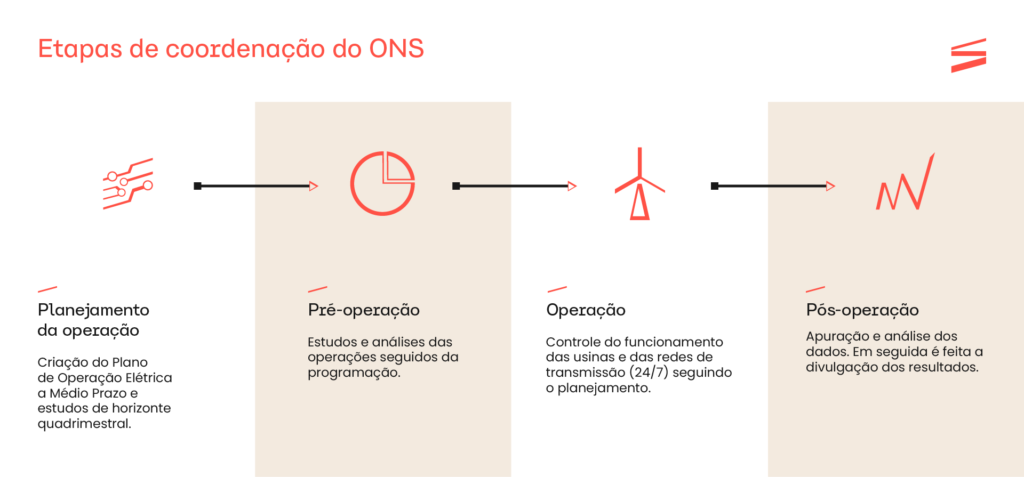
Operation planning
As mentioned earlier, for the expansion of the national electric system, ONS creates the Medium‑Term Electric Operation Plan. This plan documents which basic network expansions will occur and which facilities need reinforcement, indicating which equipment must be replaced due to end of life, risk of damage to installations or premature wear that may occur.
This plan targets the next five years, taking into account that the first two years have a more operational view and the other three years focus on the structures of the works. Additionally, in the short‑term scope, studies with a four‑month horizon are carried out to support operation scheduling.
Pre‑operation
For the system to operate within expectations and meet the required demands, ONS needs to plan and schedule the electro‑energy operation. Still
, before reaching the planning stage, various studies and analyses that can guarantee that the facilities are in compliance with physical and legal regulations.The planning of operations is done based on these studies and analyses in order to establish an optimized and safe system. Within this planning, strategies are created and result expectations are set, aiming for the lowest possible cost.
The operation scheduling is always considered in the short term, on a monthly basis, reviewed weekly and set daily. In this stage, ONS considers energy exchanges, reservoir storage level targets, and the possibility of interventions in system equipment, to ensure the operational safety of the system.
Real-time Operation
With the planning and daily scheduling in hand, ONS coordinates and supervises the operation of the Operating Network, including the transmission system and the SIN facilities.
There are several operation centers spread across the country and their functioning is similar to air traffic control, for example. In the centers, there are operators 24 hours a day monitoring the plants. These professionals monitor the daily schedule and stay on alert in case something deviates from the plan, so they can contact the plant team to understand what is happening.
Post-operation
In the post‑operation stage, ONS gathers the data related to the operation, analyzes occurrences and disseminates the results to sector agents. An evaluation of the operation is performed based on the obtained results. Possible failures or adverse events are mapped, along with their causes and possible corrective actions or preventive measures to be taken.
What is ONS's organizational structure?
In recent years, ONS has undergone significant structural transformations. The new organization values the role of a general directorate responsible for compliance, institutional relationships, communication, internal control, risk management, auditing and innovation. Above all, it seeks to focus on strategies and articulations, connecting the sector to technological and regulatory trends of the global market.
The organizational chart is divided among specialized directorates: IT directorate, agent relations and regulatory affairs, planning directorate, operation directorate, and corporate affairs directorate, focused on legal, administrative and governmental matters.
This governance model enables decisive decisions, greater agility in crises, and alignment of institutional objectives with the innovation context of the global electric sector.
Relationship between ONS and CCEE
While CCEE is responsible for all energy commercialization, ONS enables the physical and technical flow of the energy product, allowing transparent and efficient negotiations. The regulatory differences between them ensure proper separation between operational control and financial settlement, assisting the planning of the next day's schedule and enhancing the sector's legal certainty.
The integration between ONS and the Electric Energy Commercialization Chamber (CCEE) is important for the operational and financial balance of Brazil's electric sector. ONS is the one that carries out the operation planning, including simulations that define the Marginal Operation Cost (CMO), a vital indicator for setting the Settlement Price of Differences (PLD) by CCEE.
International cooperation and energy integration
Beyond its national role, ONS participates in bilateral and multilateral agreements with South American countries, promoting energy exchange, technology transfer, and international standardization of procedures. These actions reinforce regional energy integration, especially when demand or supply need to be optimized for technical or economic reasons.
ONS also collaborates with external institutions on innovation projects, research and adaptation of global best practices, bringing direct benefits to Brazil and positioning the country as a reference in efficiency and modernization.
ONS, innovation, digitalization and the future of energy in Brazil
The modernization of the electric sector requires advanced technology and operational intelligence, and ONS follows this trend investing in digitized operation centers, big data, machine learning and predictive systems that increase the reliability of the SIN.
The growing integration of renewable energies, the advancement of the free energy market and the digitalization of processes make ONS's role even more relevant for sustainability and Brazil's leadership in the global energy transition.
By promoting efficiency, safety, competitiveness and innovation, ONS consolidates its importance as an agent of transformation and development of the national electric sector.
Read also:

Redação Serena Energia
We are part of Serena, one of the country's leading generators and traders of clean energy, with 15 years of experience connecting people and businesses to sustainable and competitive solutions. Here on the blog, you'll find content on the electricity sector, Free Energy Market, sustainability, and energy transition, with clear explanations to support decisions in your daily life, whether at home or in your business.
Editor
Leave a comment
Your email address will not be published. Required fields are marked with *