
PLD: Understand the settlement price of differences (preço de liquidação das diferenças) and its impact on energy

Have you ever come across information stating that the PLD has reached its ceiling during dry seasons or is at its floor during the rainy period? It may sound technical, but understanding this indicator is essential for anyone seeking energy efficiency and savings.
The Difference Settlement Price (PLD) is one of the main indicators of the Brazilian electricity sector and directly impacts the final value of energy purchase and sale. Understanding how it works is essential for consumers and companies operating in the Free Energy Market, as it allows for better financial planning and protection against tariff volatility.
Below, we explain what the PLD is, how it is calculated, its impact on energy consumption and commercialization, and how your company can protect itself from price fluctuations.
But first, a bit about the Brazilian Electrical System (SEB)
From the generator to the final consumer, electric energy is under the control of the National Interconnected System (SIN). The main energy source of the SIN is hydroelectric power plants, but the system also integrates wind, solar, thermoelectric, and biomass plants, forming a diversified energy matrix.
Generally speaking, the Brazilian Electrical System is composed of the following stages:
Generation: primary energy (wind, solar radiation, water, biomass) is transformed into electrical energy. There are two main models:
Centralized generation: energy produced by medium and large-scale power plants;
Distributed generation: energy produced at various points of the grid, close to the consumption location;
Transmission: after generation, the energy travels through large transmission lines that take it from the power plants to the distribution grids. The transmission grids cover the entire country and are operated by the National System Operator (ONS), which ensures the continuous and safe flow of electricity;
Distribution: the energy reaches the distributors at high voltage and is transformed into medium and low voltage. Medium voltage serves industries and companies with high consumption, while low voltage supplies residences and businesses;
Commercialization: in the Free Market, energy traders play a strategic role. They facilitate entry into the free market, manage contracts, conduct the energy purchase and sale process, and ensure the necessary backing for operation.
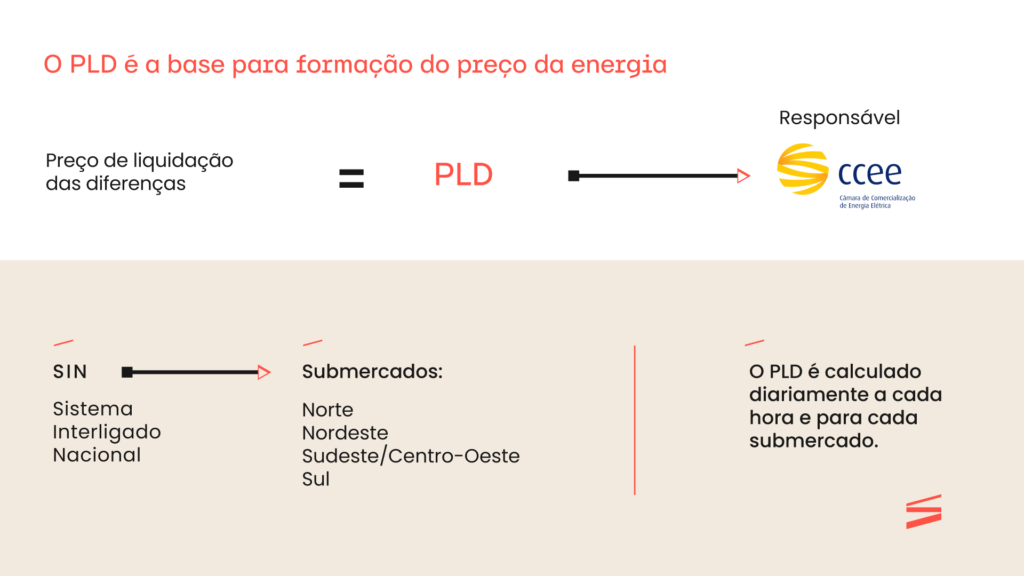
Because it interconnects different regions of the country, the electrical system is divided into four submarkets: North, Northeast, South, and Southeast/Mid-West, which do not necessarily follow regional geographic boundaries, but rather generation and consumption characteristics.
There is a PLD for each energy submarket, calculated separately based on the specific conditions of each region. It is worth noting that it is possible to trade energy between submarkets through the transmission lines that interconnect them. These energy exchanges also impact the PLD calculation, as exchange restrictions can create significant price differences between regions.
After all, what is PLD?
The PLD (Difference Settlement Price) is the radar price of the energy market, serving as the basis for short-term contracting and a reference for medium and long-term negotiations. Calculated daily on an hourly basis by the Electric Energy Chamber of Commercialization (CCEE), the PLD reflects the operational conditions of the system in real time.
The calculation is based on the Marginal Costs of Operation (CMO), meaning the cost for each additional consumption of a megawatt-hour (MWh) in the electrical system. In practical terms, it represents how much it would cost the system to produce one more unit of energy at that specific moment.
The energy bill is the sum of the base price and charges (such as transmission, distribution, tariffs, and taxes). In the Free Market, the PLD enters as a fundamental component in the valuation of the differences between contracted and consumed energy.
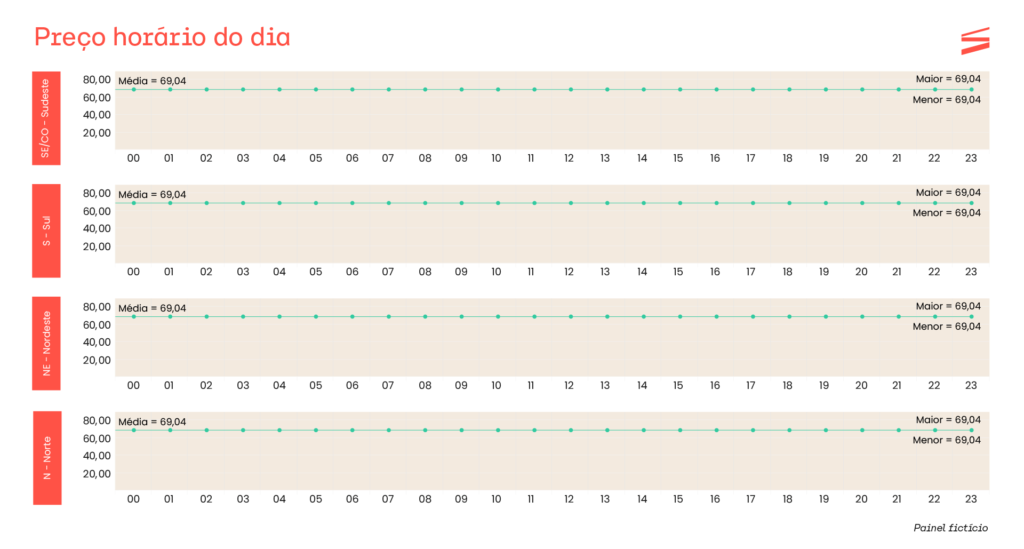
What is the purpose of PLD?
The PLD is used to value the energy settled at CCEE, that is, the energy resulting from the difference between the energy generated or contracted and that effectively consumed by sector agents.
For example: when an agent contracts more energy than they need, they receive this excess energy valued at the PLD of their submarket. This means the surplus will be sold in the Short-Term Market at the current PLD price at that hour.
In the opposite situation, meaning when energy contracting is lower than consumption, attention is required. This difference will also be valued by the PLD, but if this agent does not have backing (i.e., does not have contracts that meet their average consumption over the last 12 months) to cover it, they will suffer severe penalties, running the risk of even being disconnected from CCEE.
Where to track the PLD
It is possible to track the price panel through the website of the Electric Energy Chamber of Commercialization (CCEE), updated on an hourly basis. The panel presents historical values, projections, and detailed analyses by submarket, allowing consumers and traders to make informed decisions.
What does it mean when the PLD hits the ceiling?
When it is said that the PLD has hit the ceiling, it means that the calculated Marginal Cost of Operation (CMO) has exceeded the maximum limit established by ANEEL, and the PLD was capped at the maximum hourly value (R$ 1,611.04/MWh in 2026).
This usually occurs in critical situations of low reservoir levels and high demand, when it is necessary to dispatch the most expensive thermoelectric plants in the system. At these times, the electrical system operates under energy scarcity conditions, requiring the dispatch of power plants with high operational costs.
How is the PLD calculated?
The PLD is calculated based on the Marginal Costs of Operation (CMO), which encompass multiple variables:
State of the reservoirs;
Rainfall forecast;
Projected energy consumption;
Fuel price of thermoelectric plants;
Entry of new generation projects;
Transmission and generation availability.
This complex calculation uses advanced mathematical and statistical models to project scenarios and determine the most efficient marginal cost for the system.
What influences the PLD?
Supply and demand theory also influences the PLD calculation. An increase in electricity consumption can cause an increase in energy price and vice versa. Furthermore, as the Brazilian electrical system is led by hydroelectric power, weather conditions also significantly interfere with the PLD.
Hydrological Conditions
For example, if we are in the rainy season and reservoirs are high, the PLD will be lower, because hydroelectric generation is cheaper. However, when reservoirs are low and there is no rain forecast, the price will rise considerably, since it will be necessary to dispatch more expensive thermoelectric plants.
The seasonality of rainfall in Brazil creates a typical pattern: lower PLDs between November and April (wet period) and higher PLDs between May and October (dry period). However, extreme weather events can significantly alter this pattern.
Fuel Prices
Other factors, such as the cost of fuels (natural gas, oil, and diesel) also enter the equation. The increase in the cost of these fuels will also raise the energy price, as thermoelectric plants become more expensive to operate. Variations in the international price of oil and natural gas are quickly reflected in the maximum hourly PLD.
Energy Demand
Industrial and residential consumption directly impacts the PLD. Periods of high demand, such as peak hours (usually between 6 PM and 9 PM) or months of extreme temperature, pressure the system and raise the marginal cost. Extended holidays and economic recessions, on the other hand, reduce demand and tend to lower the PLD.
The expansion of installed capacity, especially from renewable sources like wind and solar, increases supply and tends to reduce the average PLD. In recent years, the growth of these sources has contributed to reducing seasonal volatility, especially in the Northeast.
Transmission Constraints
Limitations in exchange capacity between submarkets can create significant price differences. When a region has excess generation but cannot transmit it to another with a deficit, the PLDs diverge substantially.
PLD and the Free Energy Market
Within the Free Energy Market, the negotiated values are guided by the PLD. Understanding what PLD is is very important to operate with more autonomy and security in the Free Energy Market.
Companies that migrate to the Free Market can achieve savings of up to 30% on the energy tariff, in addition to greater cost predictability through customized contracts.
By contracting energy with specialized companies, you protect your operation from daily PLD variations through strategies such as long-term contracts, supplier diversification, and active portfolio consulting.
If you enjoyed this content, take the opportunity to check out more information about the energy market on Serena Talks, Serena's blog. Until next time!

Redação Serena Energia
We are part of Serena, one of the country's leading generators and traders of clean energy, with 15 years of experience connecting people and businesses to sustainable and competitive solutions. Here on the blog, you'll find content on the electricity sector, Free Energy Market, sustainability, and energy transition, with clear explanations to support decisions in your daily life, whether at home or in your business.
Editor
Leave a comment
Your email address will not be published. Required fields are marked with *