
Decarbonization Plan: what it is, benefits, and how it works
The Paris Agreement, signed in 2015 during COP21, outlined global goals to combat the advancement of climate change and limit warming to 1.5°C. To achieve these goals, institutions, governments, and companies outline emission reduction strategies, generally organized and explained in a Decarbonization Plan.
Brazil, as a signatory to the Agreement, committed to reducing its Greenhouse Gas (GHG) emissions by 43% by 2030, taking 2005 levels as a baseline. To achieve this objective, Brazil, companies, and society need to engage in a coordinated manner toward a low-carbon economy, with clear targets and measurable actions.
In this article, you will understand the concept of decarbonization, how a structured plan works, the relationship with the GHG inventory, and practical application examples. Check it out!
What is decarbonization?
Decarbonization is the process of reducing greenhouse gas (GHG) emissions, especially carbon dioxide (CO2), mainly resulting from the burning of fossil fuels in industrial, energy, and transportation activities.
Decarbonization is relevant because it helps reduce the effects of the planet's climate change and protects vulnerable ecosystems. In practice, decarbonizing involves actions such as increasing the use of renewable energy, investing in energy efficiency, optimizing operations, and engaging suppliers.
But why worry about reducing these emissions? One of the GHG Bulletins released by the World Meteorological Organization (WMO) in 2021 shows that carbon dioxide emissions hit a record, reaching 149% above the level recorded before industrialization, mainly due to fossil fuel combustion and cement production.
Climate Law of June 2021
To curb numbers like this, some countries adopted stricter measures through binding climate laws. In 2021, the European Union (EU) approved the European Climate Law to guarantee the legal commitment to achieve net-zero carbon dioxide emissions by 2050 and reduce emissions by at least 55% by 2030.
The Law is a milestone in tackling climate change because it proposes that organizations focus on reducing emissions at the source, rather than working solely based on compensation through carbon credits. This paradigm shift pressures companies—even outside Europe—to review value chains and create structured decarbonization plans.
What are the benefits of decarbonization?
The process of reducing carbon emissions is one of the most effective ways to keep the planet's temperature within supported levels, aligned with Sustainable Development Goal (SDG) number 13, which deals with urgent action to combat climate change and its impacts.
In addition to mitigating climate risks, decarbonization brings the possibility of highlighting Brazil in the international climate agenda and developing new carbon capture, utilization, and storage (CCUS) technologies.
The pursuit of a net-zero economy is also one of the pillars for the energy transition, which stimulates the use of clean and renewable energy sources with low or zero carbon emissions.
A good example of this movement is better understanding the Brazilian energy matrix and how it relates to the expansion of renewables. This transition can boost the generation of green jobs and the reduction of social inequalities in vulnerable communities.
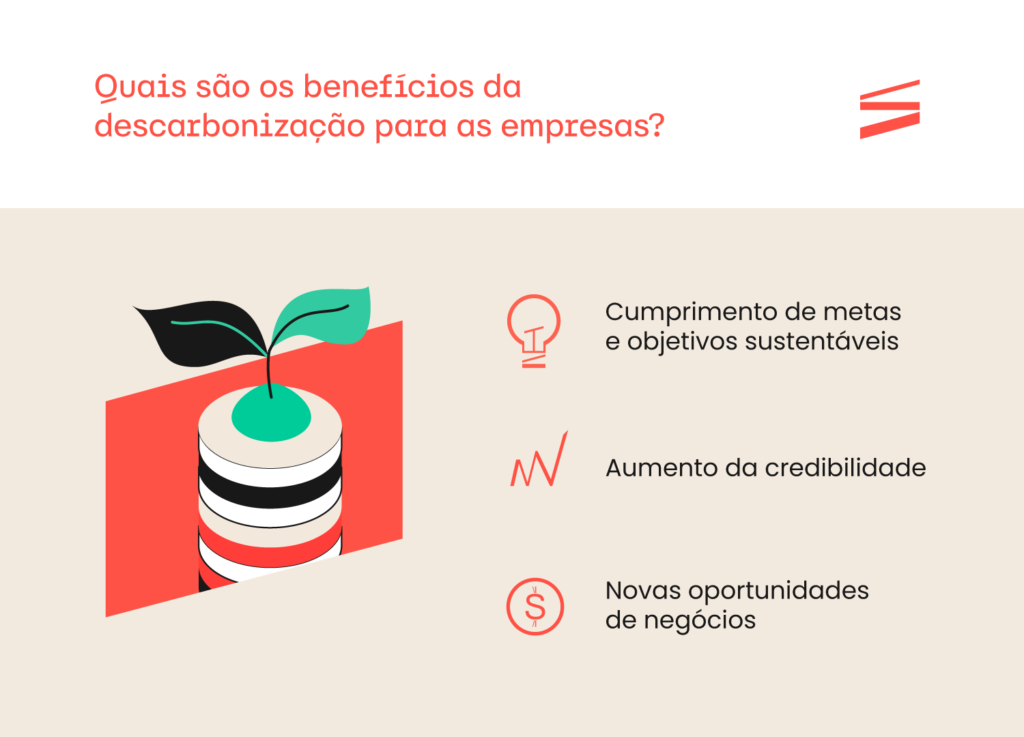
Mapping emissions through corporate inventories and creating robust decarbonization strategies generates more transparency with stakeholders (investors, clients, suppliers), boosts the company's credibility in the market, and gives visibility to new sustainable practices.
And what is a Decarbonization Plan?
The Decarbonization Plan is a strategic document that outlines the actions that will be carried out to reduce GHG emissions over time. In addition, the Decarbonization Plan also shares the set targets, the deadlines for achieving them, and those responsible for each initiative.
A well-structured plan works as a practical roadmap connecting diagnosis (inventory), data-driven targets, and initiatives prioritized by scope. This, in turn, facilitates decisions, investments, and accountability in a sustainability report.
The state of Pernambuco, for example, launched a decarbonization plan to achieve net-zero GHG emissions by 2050. In the plan, they present forecasts for investments in low-carbon technologies and electric mobility. They also estimate that this low-carbon economy will be capable of moving R$ 20 billion more in the state's GDP.
What is the relationship between the GHG Inventory and decarbonization?
First of all, for the development of a decarbonization plan, it is essential to map your company's emission sources through a structured and consistent inventory. Without this quantitative diagnosis, it becomes impossible to establish realistic targets or demonstrate measurable progress.
The Brazilian GHG Protocol Program, which Serena has been affiliated with since 2021, adapts the international methodology of the GHG Protocol Corporate Standard and is responsible for developing standardized GHG emission calculation tools.
The public emissions registry of the GHG Protocol Program facilitates the disclosure and transparency of GHG emission results. Once published, inventories are classified into seals: bronze (partial inventory – Scope 1 and 2 only), silver (complete inventory – all scopes), and gold (complete and verified by an Inmetro-accredited body).
In addition to supporting climate goals, the inventory also speaks to management and governance practices, since reliable data helps the company prioritize investments and report results with consistency. If it makes sense in your context, it is worth delving deeper into the topic of corporate governance.
What is Serena's decarbonization plan?
Serena's Decarbonization Plan was built based on data reported in the GHG Inventory, base year 2021, which classifies emissions into 3 distinct scopes, namely:
Scope 1: direct emissions from sources that are owned or controlled by the organization. Examples: stationary combustion, company vehicles, fire extinguishers, air conditioning, etc.;
Scope 2: indirect emissions related to the purchase of electricity;
Scope 3: indirect emissions of the company. Examples: business travel, employee commuting, purchased goods and services, transportation and distribution, waste generated in operations, etc.
In 2022, in addition to mapping emissions, Serena achieved the Gold Seal certified by the GHG Protocol. By analyzing the three emission scopes, especially Scope 1, and based on Serena's growth projection, strategic targets were drawn up to be implemented in an integrated manner with a major socio-environmental impact. The defined pillars were: mitigation, communication, emission management, and compensation.
Within each scope, specific targets were outlined such as:
100% replacement of fossil fuels with biofuels by 2028;
Replacement of refrigeration equipment, among other actions;
Optimization of the use of fossil combustion equipment;
Automation of operational waste generation data;
Incentive for carpooling groups.
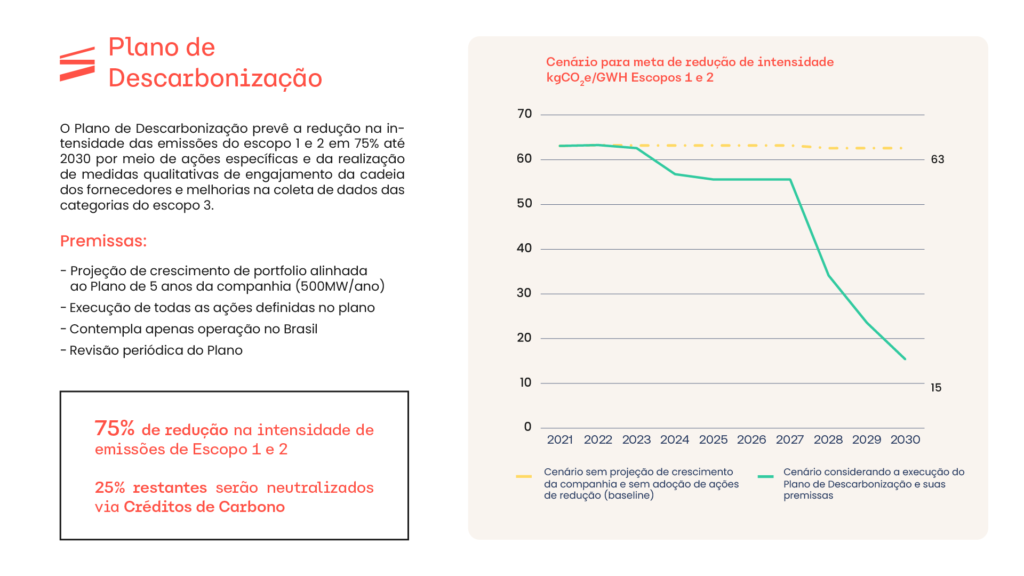
The Decarbonization Plan provides for a 75% reduction in the company's GHG emission intensity for GHG scopes 1 and 2 by 2030, in addition to neutralizing the remaining 25% via carbon credits. Furthermore, the plan encompasses qualitative measures for supplier engagement and improvements in data collection in the case of scope 3 emissions.
When it comes to renewable electricity, some companies also opt for traceability instruments (when applicable), such as clean energy certificates, to reinforce transparency and proof. To understand this logic, see: I-REC: what are the benefits of clean energy certificates.
Next steps for an effective decarbonization plan
Structuring a decarbonization plan requires commitment, reliable data, and constant reviews to track progress and adjust the course as necessary. The climate journey does not end with the plan: it extends to execution, monitoring, and transparent communication with stakeholders.
If the idea is to take decarbonization out of the project field and bring it into business strategy, the next step is to understand how to structure a broader agenda of impact, indicators, and governance. Check out the guide “Corporate Sustainability: what is it and how to implement it in your business?” and see how to connect environmental goals to your daily operations.

Redação Serena Energia
We are part of Serena, one of the country's leading generators and traders of clean energy, with 15 years of experience connecting people and businesses to sustainable and competitive solutions. Here on the blog, you'll find content on the electricity sector, Free Energy Market, sustainability, and energy transition, with clear explanations to support decisions in your daily life, whether at home or in your business.
Editor
Leave a comment
Your email address will not be published. Required fields are marked with *