
Why is the Clean Energy Market on the rise?
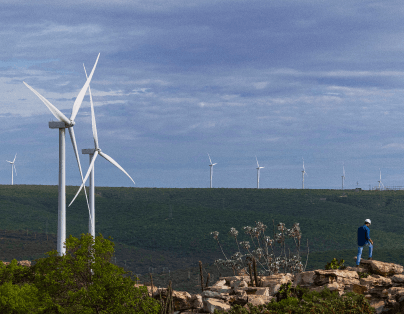
Far from being just a passing trend, the clean energy market — boosted in recent decades — manages to combine a global search for sustainability with the need to deliver more efficient ways of generating and consuming energy. For Brazil, in particular, the possibility of investing increasingly in renewable energies, such as solar energy, wind or hydroelectric, would put the country ahead. But there is still much to be done.
Moreover, the clean energy market can also contribute to a company's success, combining innovation, competitiveness, freedom of choice and environmental responsibility. Imagine reducing the company's costs by buying renewable energy directly from the producer, increasing spending predictability and contract flexibility.
Below, understand what the clean energy market is, how it works and the reasons for its high demand. Additionally, you can also see the advantages of investing in renewable energy by analyzing its benefits. Keep reading!
What is the Clean Energy Market?
Imagine negotiating competitively, directly with the company that offers a certain service, in this case, clean energy. This is how you can understand more clearly: what the Free Energy Market is.
In it, it is possible to negotiate supply period, payment, amount of energy used and suppliers. Thus, in a free‑choice environment, the consumer can contract services based on their company's needs. In this way, being able to choose the energy supplier can be a fundamental gain for saving.
What does the clean energy market operate with?
The clean energy market operates in supplying energy to companies or consumer units with high monthly consumption, whose electricity bill exceeds R$40 000. This scenario is expected to expand in the coming years, reaching even individual consumers and not only legal entities.
Today, companies that have a contracted demand equal to or greater than 500 kW can enter the Free Energy Market to contract renewable energy. Consumer units with the same CNPJ in different locations or different CNPJs whose physical spaces are not separated by public roads can also enter the Free Market through load aggregation, i.e., when the sum of contracted demands is at least 500 kW.
Thus, the Free Energy Market is a great solution for companies to purchase energy at a more competitive price, being able to choose a company like Serena, which is the largest renewable energy generator in Brazil.
National Integrated System (SIN)
In Brazil, the National Integrated System (SIN) encompasses all companies responsible for the energy stages (generation, distribution and transmission). This system covers the Northeast, Central‑West, most of the North region, South and Southeast.
To maintain organized and regularized management, the SIN (National Interconnected System) is linked to the Electric Energy Commercialization Chamber (CCEE), where the general negotiations of the Clean Energy Market take place. Currently, the prevailing model is divided into Regulated Contracting Environment (ACR) and Free Contracting Environment (ACL).
Captive Market (ACR) and Free Market (ACL)
To quickly understand how the Energy Market is organized in Brazil, it is necessary to understand how energy is contracted. Thus, there are two possibilities: the Captive Market, also called Regulated Contracting Environment (ACR) and Free Contracting Environment (ACL), or Free Market.
On one side, there are captive consumers, who have access to energy through distribution utilities. The bill paid is known as an invoice issued every month, without negotiation between the parties, unlike what happens in the Free Contracting Environment.
On the other side, there is the free consumer modality, which purchases energy without the need for outsourcing. This occurs through the creation of bilateral contracts. The conditions, as explained earlier, are flexible and discussed between the two parties. Thus, the company will bear a cost related to the distribution service (energy transport costs), and another invoice related to the purchase of the energy itself, which is effectively negotiated in the contract.
To quickly situate, the Free Contracting Environment (ACL) was created in 1998. It operates according to the regulations of ANEEL and the Electric Energy Commercialization Chamber (CCEE).
Why is the clean energy market on the rise?
Why is the clean energy market on the rise?
The need to reduce environmental impact drives the adoption of sustainability‑focused innovations. Here, it stands out that profit is not limited only to the company's financial amount, but also to a movement aligned with a sustainable culture. The reason is simple and justified by the symbolic capital this represents for an organization.
This is because companies that use renewable energy sources contribute to creating a sustainable culture, which contributes to a cleaner future, with low‑carbon economy and democratization of access to clean energy.
Generation of significant savings for companies
As evidenced throughout this article, the generation of savings for companies is one of the most important reasons why the clean energy market is on the rise. A company that sees its energy expenditure decrease substantially becomes more competitive, as it can lower product prices, invest in innovation projects, or invest in new ventures.
Greater visibility of sustainable issues
Sustainability is not just a name present in advertising, news, and government agendas. This concept can also, in many cases, be embedded in strategic corporate financial planning.
At Serena, the company was founded based on ESG practices, meeting society's aspirations for a more sustainable future for the planet and people. This purpose ensures that the company is a protagonist of clean energy transformation through continuous investment in operational assets for renewable energy generation.
And that is why we fight tirelessly for the cause of 100% renewable energy that creates value for all and each of our stakeholders.
Is it worth joining the Free Energy Market?
Now that you already know the fundamental information to understand the Free Energy Market, it is important to note that it is more advantageous for companies. After all, besides the market continuously growing, the savings are considerable for consumers through this type of contracting.
What are the benefits of the Free Energy Market?
The benefits of joining the Free Energy Market are guided by six points: freedom from tariff flags, flexibility, competitiveness, predictability, freedom of choice and the same energy price during peak and off‑peak hours. Below, you will have a more detailed explanation of each advantage.
Freedom from tariff flags
Since 2015, there has been a guideline that establishes the variable value of electricity generation, the so‑called tariff flags. Organized into different levels, such as green, yellow, red 1 and red 2 flags, the rate reflects, in the context of available energy supply, what the cost of energy generation is across the entire consumption grid for the National Interconnected System (SIN).
Flexibility
Imagine buying energy with a flexibility that guarantees the tranquility
the advantage of knowing that you will only pay for what you use, without abusive fees. Normally, in standard contracts within the Free Market, there is a limit to hiring flexibility. With Serena, the contract is 100% aligned with consumption, so you only pay for what is used, with total flexibility.
Competitiveness
More efficient services are encouraged when there is a need to highlight them against other companies that also provide the same product. This would not be different for companies that participate in the Free Energy Market.
Thus, competition among a heated market of energy traders and generators favors competition and greater care in the services offered.
Freedom of choice
Consuming energy with the freedom to choose which type of supplier and which type of energy is another benefit of the Free Energy Market.
Predictability
Gain greater control over electricity costs through the predictability of a detailed contract on the amount you will pay per MWh of consumption. Thus, avoid surprises in the amount of an energy bill. This is ideal for maintaining security in the company's cost spreadsheets.
Same energy price during peak and off‑peak hours
During consumption peaks, energy tariffs have higher values in the Regulated Contracting Environment. This scenario is different in the Free Contracting Environment, where the price is the same, regardless of whether the time has high demand or not.
How to enter the Free Energy Market?
So, if you have already decided to enter the Free Energy Market, it is time to correctly understand the criteria to go through the entire process in the best way, with transparency and agility. For this, you need to analyze the profile, review the consumption history, choose the best energy source, conduct a credit analysis and, finally, formalize the contract.
Choice of energy source and best proposal
Once the profile and consumption history have been analyzed, it is time to find the energy sources and the most suitable proposals for the consumer. The commercial proposal is made based on the company's needs according to its energy consumption. Therefore, many proposals are customized to bring savings and greater efficiency for the consumer.
Contract formalization
If everything complies with the CNPJ conditions, the contract is signed and formalized. Then, entry into the Free Energy Market occurs. As you have noted while reading this text, the economic future of companies is directly linked to the adoption of renewable practices, among them, entering the Free Energy Market.
Negotiating directly with those who generate and market the energy can be a smart investment for your business. Serena has 100% renewable production and guarantees savings for your company.
Want to start saving on your company's energy bill? It's easy and simple: calculate your savings right now!
See also

Redação Serena Energia
We are part of Serena, one of the country's leading generators and traders of clean energy, with 15 years of experience connecting people and businesses to sustainable and competitive solutions. Here on the blog, you'll find content on the electricity sector, Free Energy Market, sustainability, and energy transition, with clear explanations to support decisions in your daily life, whether at home or in your business.
Editor
Leave a comment
Your email address will not be published. Required fields are marked with *